
Best Scalable B2B SaaS Lead Generation Strategies

Last Refreshed: March 2026 with updated statistics and tool information.
There’s no other way to put it but this: Do you want to grow your B2B SaaS business? Then you need leads. A steady stream of leads will allow your sales team to refine and grow your SaaS into a successful venture.
However, leads don’t show up in front of your door just because you have a great solution to offer. As with sales, there are strategies for attracting SaaS leads. In this article, we’ll introduce you to twelve scalable lead generation strategies that you can use to grow your customer base.
12 Ways to Scale SaaS Lead Generation
To maintain competitiveness in SaaS marketing, you’ll need to be able to quickly scale your lead growth to ensure long-term success. Here are twelve actionable ways you can use to scale up your lead generation and drive more sales:
1. Pay attention to software discovery platforms.
Every new lead that comes into your business is at a certain stage. Leads are considered to be classified into three main categories: cold, warm, and hot leads, and each strategy is better suited for a specific type of lead.
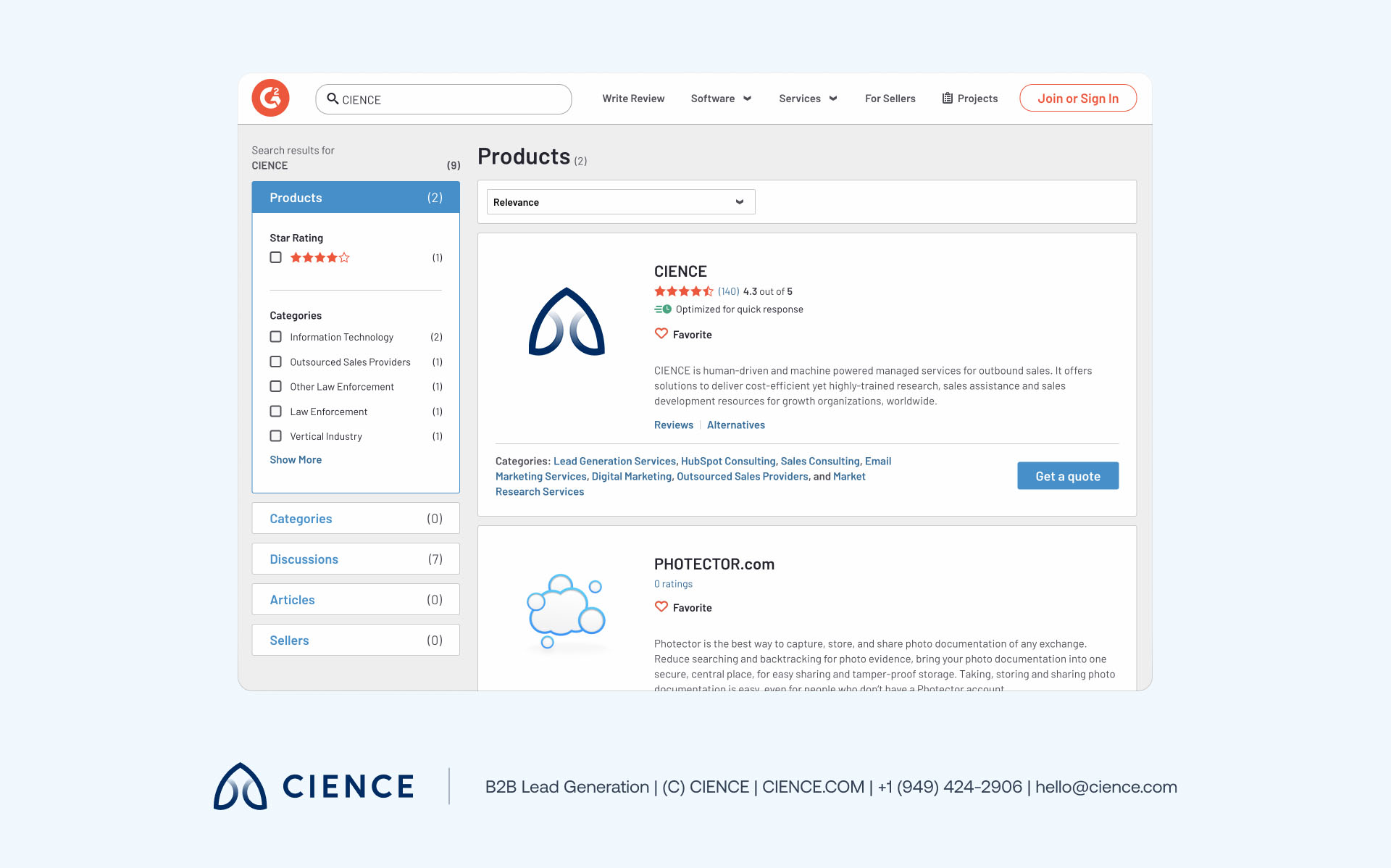
Software discovery platforms or tech marketplaces focus on gathering reviews around software solutions to help businesses and individuals pick the right tech stack to run their operations. A clear example of this is G2.
These platforms are well-positioned and they are now trusted by millions of decision-makers to find, buy, and review their software. For B2B sales, it also means that millions of warm leads are at your disposal if we create, optimize, and grow our business profiles.
Decision-makers using these platforms are looking to buy a solution. They already understand what their problem is and have an idea of how to solve it. By showing at the top of their searches, you can start a conversation with highly motivated buyers that just need a push to convert into paying customers.
Source: G2.com
2. Use SEO to bring potential new users.
Nowadays, almost every buyer’s journey starts with a Google search, and with over five billion daily Google searches, being at the top of the search engine results pages (SERPs) will have a very positive impact on your return on investment (ROI).
Of course, increasing organic traffic is not easy. Search engine optimization (SEO) plays a key role here. SEO it’s all about matching search intent and proving the best answer to a user’s query. If you can do that, you’ve already won 80% of the battle. If you don’t have enough experience, you can always hire a SaaS SEO service that would help you create a successful strategy.
To develop your SEO strategy, you can start by defining what the end-users need and how they will use your tool. Knowing what problems they want to solve and how your solution helps them will be key to reaching them.
For example, suppose your tool uses data to determine fintech opportunities. In that case, you can create a series of articles explaining how fintech software development can leverage data to gain an advantage over their competitors, when it’s the best time of the year for outreach, and so on.
If you focus on what your ideal users need, then creating SEO content will become second nature.
3. Create lead magnets and interactive tools.
Most companies think about e-books or gated content when they think about lead magnets. However, the most effective kind of lead magnets are those that help your users work more efficiently, effectively, and faster.
An example would be a checklist aiming to streamline a complex process or excel tools that make working with data faster.
These tools are great for gathering more email subscribers that you can then nurture with your email workflows. They also generate organic traffic, help you build backlinks, and strengthen your brand.
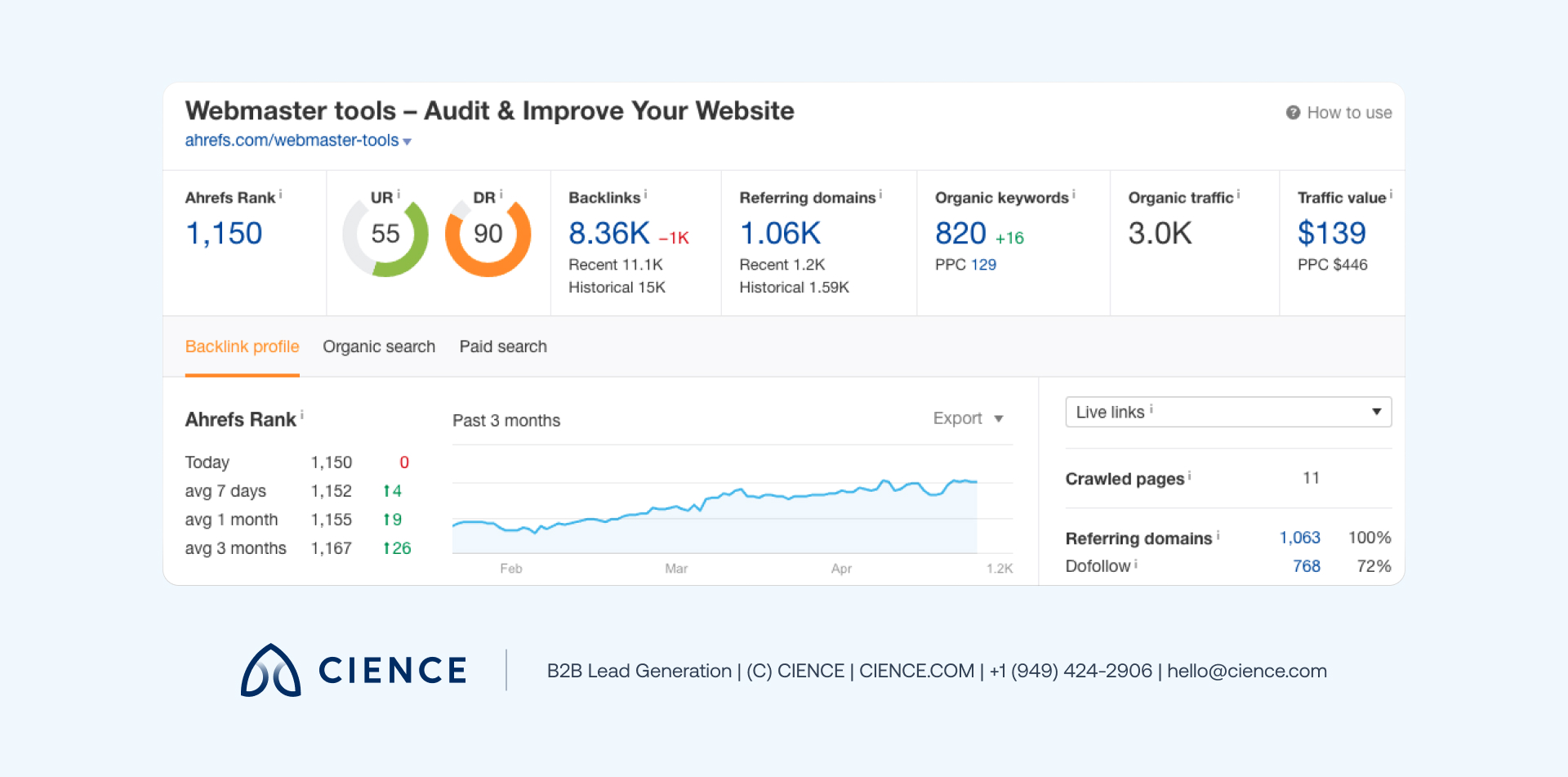
Not too long ago, Ahrefs launched their free Webmasters Tools site and it has won over 8,000 backlinks and brings around 3,000 organic visits per month.
Source: Ahrefs.com
Interactive tools are great because they allow you to establish a closer relationship with users based on results before they commit to converting into paying customers.
4. Use case studies to show tangible results.
Content is key to attracting users at any stage, but it takes a step further to get those users to convert.
Companies are under a lot of pressure and want to be sure that your solution will help them achieve their objectives before committing to your product.
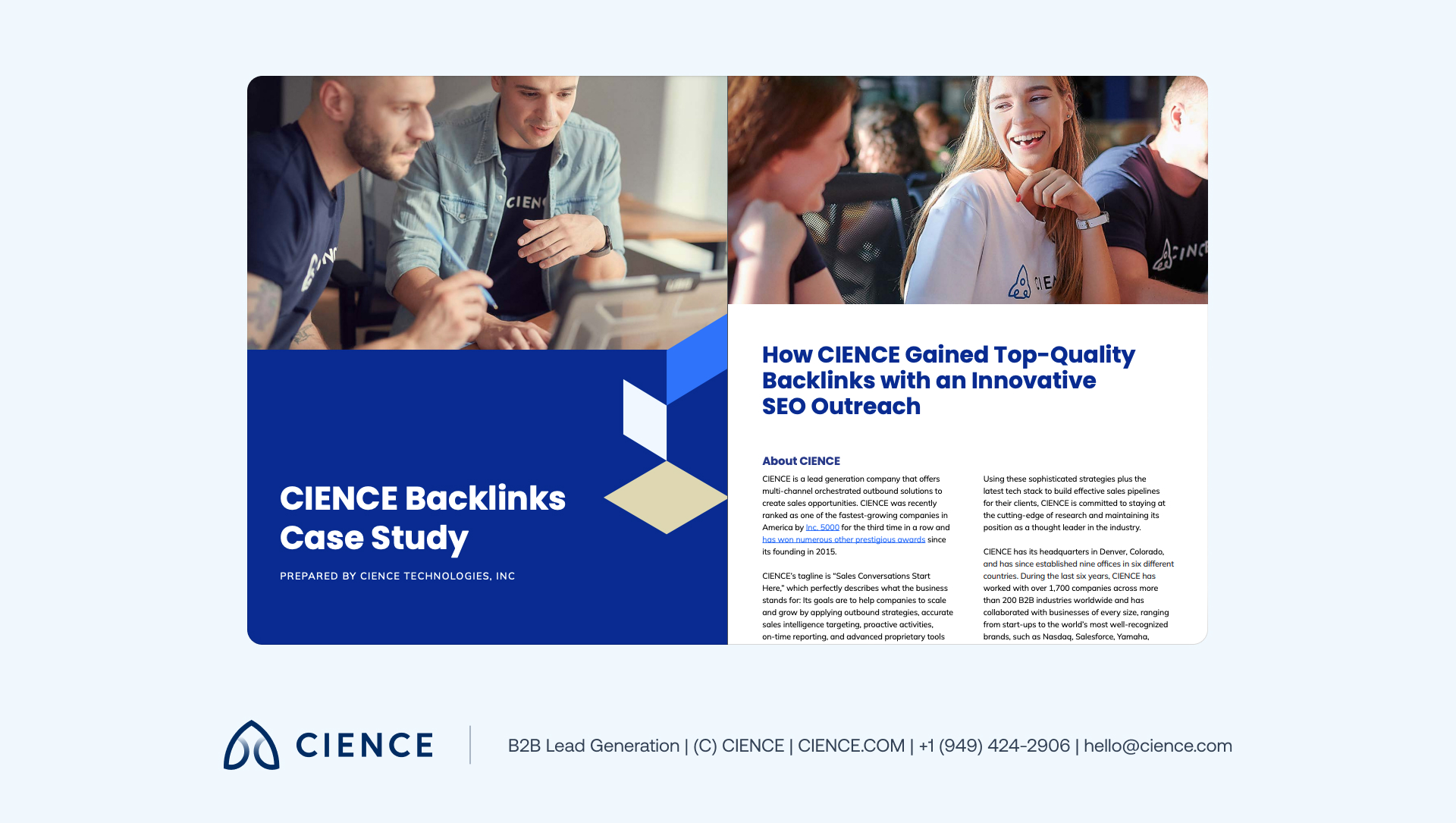
Case studies are very effective in building trust because they represent the point of view of previous customers. They can be the decisive element for a visitor to become a lead as they can see themselves reflected in the story (if the case study is in their same industry), get immediate answers to their questions, and get a feeling of what it is like using your solution.
5. Build authority with data-driven content.
Content that’s based on original research should be at the top of your list of priorities as these are great pieces to build authority, gain high-quality organic backlinks to support your SEO, and—if the data is useful or the result is controversial—improve brand awareness through multiple outlets.
As a SaaS team, you’re probably already gathering a lot of information on how your users interact with your tool, so you can start from there. Use your data to gain insights into the topics your potential customers care about.
To take it a step further, you should offer content in different formats, such as podcasts or newsletters, to nurture your audience and position yourself as a subject matter expert in your industry.
It’s important that you have a clear plan before committing to the project as these are more time-consuming than normal articles. Answer these questions to make a solid plan:
- What’s the topic? Think about what your audience might be interested in learning and how can data give insights into it.
- What data do you need to gather? Every study is different and requires a certain type of data point.
- What’s the best technique to gather it? Depending on the kind of data you need, you’ll want to use different strategies like surveys, interviews, web scraping, etc.
- How will you analyze the data? Knowing how you’ll analyze the data obtained will make it easier to format it in the most appropriate way.
How and where will you share the piece? This is for content marketing, so having a distribution plan is crucial—don’t make it an afterthought.

6. Expand your outreach campaign through podcasts.
According to LinkedIn, 44% of senior-level decision-makers including department heads, VPs, owners, and C-suite executives, take the time to listen to podcasts. So yes, decision-makers are listening and that’s where you need to be.
While creating your own podcast can be a great strategy, you don’t need to wait to build an audience. Find out what topics might interest your potential customer and be a guest speaker on those podcasts to share insights, case studies, statistics, or practical information. These will give your brand a boost in awareness and provide potential new customers with a connection to your business.
Remember that people follow humans, no corporations. Podcasting humanizes your brand, builds new bridges between an untapped market for your company, and creates trust with C-level executives.
But, to push it a little bit further, think about what podcasters are worth sponsoring. It will take some trial and error but if a podcast is bringing you new leads, it might be a great investment in the long run.
CIENCE’s weekly Enterprise Sales Development podcast interviews all types of industry leaders, including this podcast-turned YouTube video, featuring CIENCE’s CEO, John Girard.
7. Ask for referrals.
Your users are the best marketing allies you have. If you’re not asking for referrals, you’re missing out big time.
If you’re providing the best experience possible, people will naturally talk about your solution. However, instead of waiting for it to happen, you can be more proactive by:
- Creating a referral system that rewards recommendations.
- Asking directly for a referral from six months to one-year-old and older accounts.
- Asking for referrals after major success has happened, such as customers achieving a milestone.
8. Build your network on LinkedIn.
LinkedIn is the largest professional network in the world. However, founders tend to forget something else: It is also a social media platform, and like in any social network, people want to follow other people.
A LinkedIn company page has its value, but it is not enough to gain high-quality leads.
Instead, think about your company page as the second step of the sales funnel. Before people want to interact with your business, they are more likely to want to interact with you. Use your personal account to build a social media presence on the platform to build relationships and expertise.
Once people know enough about you, they will go to your profile or to your company’s page to learn more about what you have to offer.
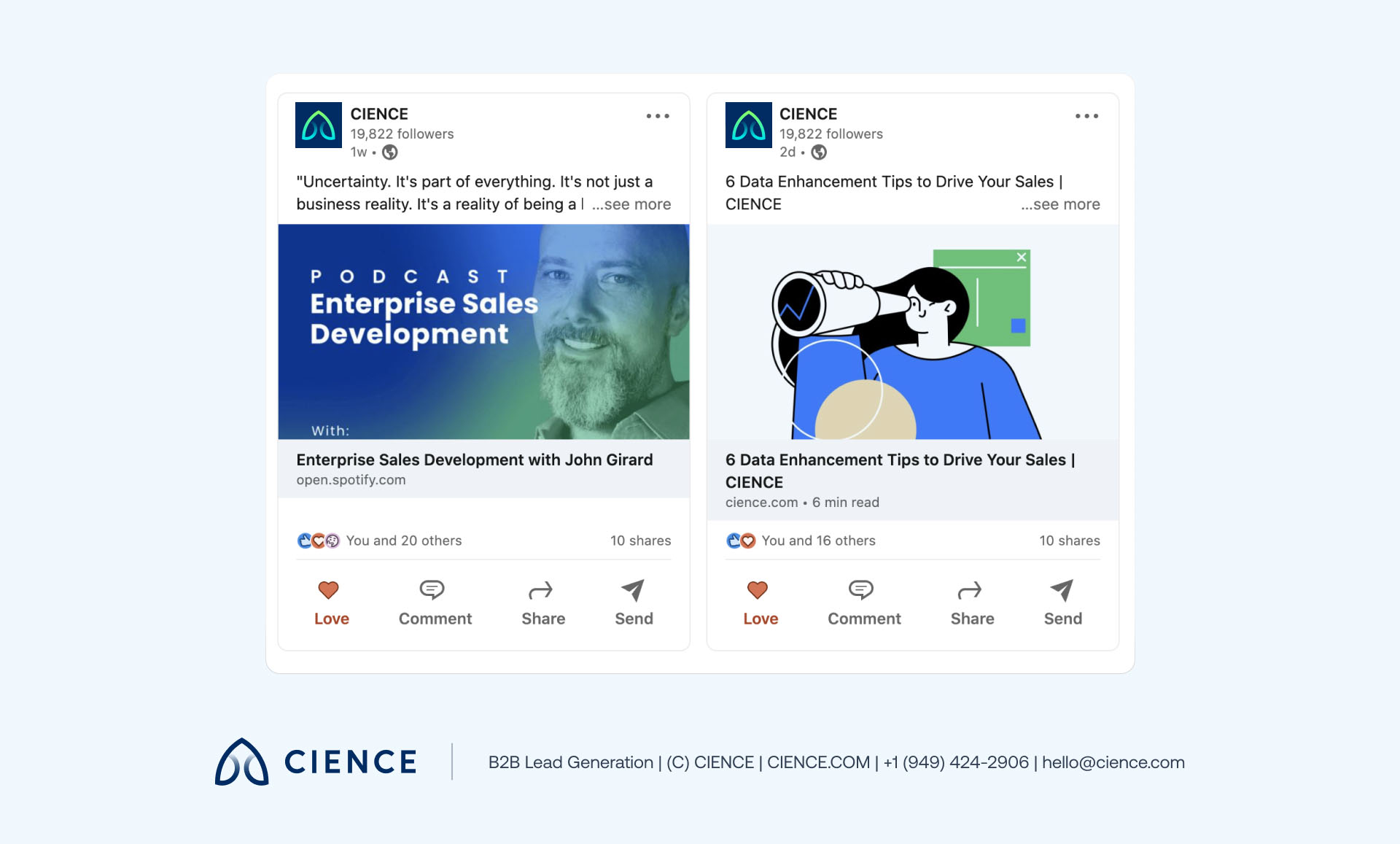
In other words, you need to be your top brand evangelist to find success on the platform. Like posts or share company blogs, guest posts, podcasts, and other content with your LinkedIn community:
9. Create a social proof wall.
By definition, B2B requires a bigger monetary investment than B2C. In this sense, the major currency to win more B2B SaaS leads is trust, and nothing builds more trust than social proof. Being able to back up your claims using your customers’ words is invaluable.
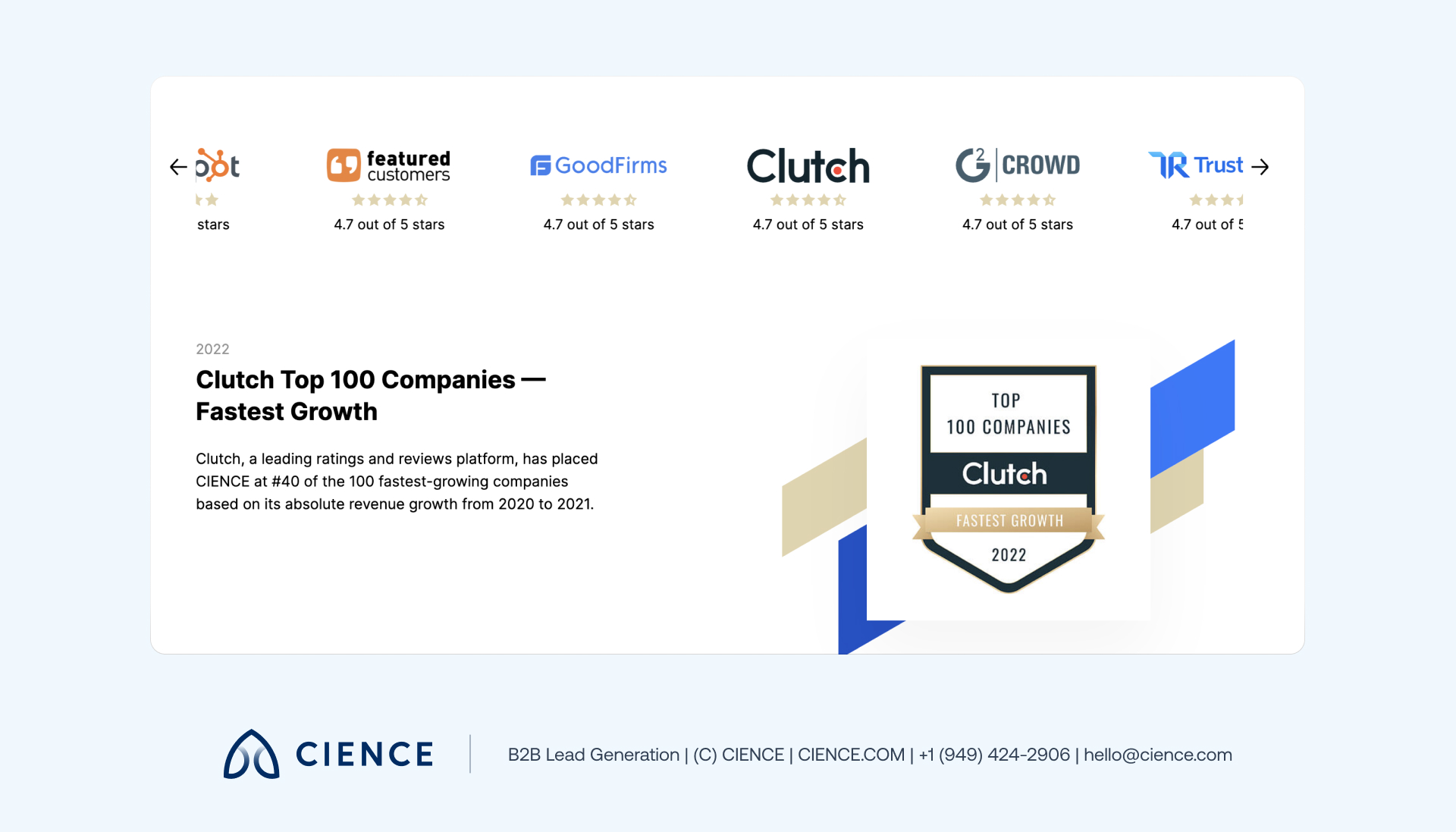
Partnering with review sites such as UpCity or Clutch, creating interactive social media content, providing real-life customer testimonials, and showcasing top awards are instantly more engaging and trustworthy than proclaiming yourself the best solution.
10. Build competitor tool vs. your tool pages.
Comparison pages are a great way to generate SaaS leads as long as your tool has unique advantages (even one is enough) over your competitors. These pages work great because buyers will organically compare different providers against each other to make sure they’re picking the right one for their use case.
This is a great opportunity to stand out from the crowd by showcasing what makes you different and/or better, and they will generate almost ready-to-close leads because they’re already in the consideration stage of their buyers’ journey.
Here are a few recommendations when building your pages:
- Study your competitors from different angles: price, functionality, user experience, etc.
- Make sure to emphasize all major differences in an easy-to-understand format. In other words, don’t make them work.
- Provides tables, graphics, and any other resources to make it faster for C-level executives to take action.
- Be honest and don’t use clichés. For these pages, it is better to show than tell.
However, if your SaaS is new to the market, you might want to use a “Tool A” vs. “Tool B” rather than a “Your Tool” approach. This way, you can use your competitors’ positioning to your advantage.
11. Create communities using video content.
There comes a time in every founder’s life when they think: what if we do YouTube? And the answer is yes, go for it … but be smart about it.
CEOs, CMOs, and CFOs are all human beings with different interests. More often than not, companies tend to do low-budget, boring videos that don’t really do much for their users—not even entertain them. However, there’s a space for video content in your SaaS.
Find what problems or areas of interest your ideal buyers have in common and create video content around that, and it doesn’t have to be just only related to your product. You can also organize webinars and conferences, in which case you may need to integrate a conference call service for support. Instead, focus on the industry as a whole. Become a news source or showcase use cases.
CIENCE’s enterprise podcast also interviews the heavy hitters in the industry, introducing unique topics and conversations that put a buzz out in the community. Check out this interview as Stanford’s Dr. Carmen Simon deconstructs how the brain interprets a cold call:
12. Sponsor virtual and hybrid events in your industry.
Sponsoring events is a great way to gain leads at scale because your brand will be exposed to a large audience of like-minded people.
Look for events related to your business or your clients’ interests and keep an eye out for them. You can participate in different ways, from being a sponsor to participating in panel discussions or as a speaker.
And if there are no events but there’s an interest, then be the first one to create one. Get people from different B2B industries and backgrounds together to share their experiences and insights, and become one of the pillars of the community.
It sounds like a lot of work but it’ll pay off sooner than later. Remember that trust is the main currency in the B2B space, and when you’re at the center of the conversation, you’re everyone’s trusted friend.

Scale Up Your Lead Generation
Generating leads is about finding the right marketing strategy for your company, and it all starts with customer research. Find out where your ideal customer is, how they look for answers, and what they care about the most.
If you understand their journey, you’ll know exactly what to build to grow your SaaS at scale without sacrificing sustainability.