
How to Conduct Competitor Website Analysis Effectively: A Step-by-Step Guide

Last Refreshed: March 2026 with updated statistics and tool information.
It’s no secret that keeping tabs on your competition is essential to the success of your business. By performing a competitor website analysis, you can gain insights into what strategies and tactics they’re using to attract customers and grow their business.
In this step-by-step guide, we’ll explore how to conduct an effective analysis of your rivals’ websites, how to identify their strengths and weaknesses, and how to figure out what makes them unique. So whether you’re just starting or you’re looking to take your B2B business up a notch, read on for all the tips and tricks you need to know.
What Is a Competitor Website Analysis?
A competitor website analysis is the process of studying your competition’s online presence to understand their marketing strategies and identify potential areas of opportunity for your own business. By understanding what tactics your rivals use to attract customers, you can develop a more effective online marketing strategy that sets you apart from the competition. Companies of all B2B industries can benefit from knowing what their competition is up to.
How Can a Competitor Website Analysis Help Your Business?
Analyzing your competition’s online presence can provide you with an inside scoop on what tactics work best for other businesses in your industry. This will give you insight into making your site more effective by looking into what works and what doesn’t.
For example, as a B2B marketer, you may be biased against using quizzes as an effective marketing strategy because you read somewhere that they weren’t effective for B2B businesses. It’s possible that many in your field feel the same way and are not using this strategy. However, suppose at least one important company is using quizzes successfully to generate leads. In that case, a competitor website analysis will reveal it, and using that same strategy is an opportunity to get an edge over the rest of your competition.
In other words, even if your rivals aren’t using particularly innovative strategies, analyzing their websites may still reveal specific strategies they’re using that you’re not, and that could work well for your brand too.
Of course, competitor analysis may also tell you what your rivals aren’t doing. It can expose the flaws in their marketing that you may capitalize on. Regardless of how you do it, competitive analysis is an important tool for staying ahead.

9 Steps to Performing an Effective Competitor Website Analysis
Analyzing the competition means identifying the gaps in your rivals’ strategies to help you decide where to invest your time and resources when creating content, optimizing your site for search engines, etc. You can do this by following the next steps:
1. Identify and make a list of your competitors.
The first step in any competitor website analysis is to identify your competition. This can be done differently, depending on how thorough you plan to be. There are three major sources where you’ll find this information:
- Known direct competitors in your industry.
- A Google search for your most relevant keywords.
- SEMrush: This tool allows you to identify competitors by analyzing your website’s keywords and suggesting other domains that rank for the same keywords.
- Ahrefs: Similar to SEMrush, Ahrefs can list competitors based on shared keywords and backlink profiles.
- SimilarWeb: Offers insights into competitors by analyzing traffic sources and audience demographics.
- Moz: Helps you find competitors through keyword analysis and domain comparisons.
- BuzzSumo: Identifies competitors by revealing your industry’s most shared content on social media.
Utilize competitor website analysis tools.
Top Tools for Identifying Competitors:
Pro Tip: Many SEO tools offer free trials—use them to gather initial data without committing to a subscription.
After you’ve found your rivals, it’s critical to learn as much about them as possible to create a company profile for each of them. Info like website URL, when was each company founded and who founded them, the names of their executives, and any other data you can get your hands on are all important.
Pro Tip: Prioritize analyzing competitors who perform exceptionally well in your niche.
2. Analyze their positioning.
Once you have a list of your competitors, it’s time to start analyzing their websites, and you should start with positioning. This involves looking at what each company is saying about themselves on their website and understanding how they see themselves in relation to the rest of the industry.
There are a few key things you can look for:
- Their tagline, which should describe what they do at a very high level.
- Their mission statement, which you’ll usually find on their “About Us” page.
- The language they are using on their website to get an idea of what kind of language competitors think works best in describing themselves to their audience.
Pro Tip: Compare competitors’ taglines and mission statements to spot common themes and USPs, helping refine your own positioning.
3. Identify their target segment.
Once you have a good understanding of your competitor’s business, it’s time to start analyzing their marketing efforts, and this starts with trying to identify their target segment. This can be tricky, as it’s not always easy to tell from their website or marketing materials. However, there are some clues that you can look for.
In the case of B2B companies, one of the easiest ways to quickly understand the type of customers your competitors are targeting is by checking out their customer list. More often than not, you can find this list on the home page or subpages of their website since B2B companies always like to brag about their clients to build trust with new prospects.
If that fails, consider your competitor’s language when talking about their target market. For example, if they use phrases like “start-ups in the technology sector,” you can assume this is their target segment. Another great tip is to look at their customer testimonials to get an idea of who their current customers are. Exploring a variety of small business ideas can also provide insights into potential niches and target segments that may not be fully tapped by your competitors.
Pro Tip: Consider your competitor’s language and customer testimonials to infer their target market.
4. Analyze site performance and user experience.
We’ve only focused our analysis on crafting the most accurate company profile possible for each of your potential competitors in the market until this point. Now it’s time to build an objective view of the quality of each competing website to identify its strengths and weaknesses. This starts with website performance and the overall user experience.
There are a few key elements to analyze when assessing these website parameters, such as:
- How quickly does the website load?
- Is the layout easy to navigate?
- Are the fonts easy to read?
- Is the text well-formatted and easy to read?
- Are the images properly sized and optimized?
- Are there any broken links or images?
- How user-friendly is the overall design?
To make things more objective, you’ll want to create some sort of scoring system (a scale from 1 to 5, for example) for each aspect of site performance. This or using specialized user experience (UX) testing tools will make it easier to compare the different websites head-to-head, including yours.
Pro Tip: Use specialized user experience (UX) testing tools to compare different websites head-to-head.

5. Take a trip down their funnel.
It’s time to look at your competitors’ marketing funnels and see how effective they are. This includes everything from email marketing campaigns to their retargeting efforts. The best way to understand what each competitor is doing in this area is to experience it yourself as a user.
Look at all the calls to action on each web page and click on them to see where they take you. Also, make a note of everything they offer in each stage of the sales funnel:
- The type of copy they use.
- The digital assets they use (images, videos, audios, etc.).
- Anything that tells you how they generate leads and convert them into paying customers (like digital flipbooks).
If they show a pop-up with an email-capture form, fill it out and submit it and take note of the email (or emails) you receive. You should go down every rabbit hole you can find that doesn’t require making a purchase. That way, you can get a global picture of their marketing strategy.
Pro Tip: Go through each step of their sales funnel as a user to get a comprehensive view of their marketing strategy.
6. Find out what stack the website is built with.
There are dozens of different tools and platforms to build websites, and some are better for some applications than others. While most websites on the internet are built with WordPress, some specialized websites are not, so it’s important to find out what your competitor’s websites were built with. If there’s one website that you found particularly appealing, and you find out it was built with a different CMS than what you’re using, you may want to consider switching platforms in the future.
Fortunately, finding this information is easy. Free services like BuiltWith will give you a snapshot of the tools and plugins your competitors’ websites are running. There will also be a way for you to be able to find out where their website is being hosted, whether they use managed or dedicated hosting, what email services they use, what payments solutions and integrations they have, and more.
Pro Tip: If a competitor’s website stands out to you, consider if switching to their CMS or technology stack could benefit your site.
7. Analyze their content strategy.
Though they may present their content in very different ways, there is one thing all your competitors have in common: they are putting out content regularly. Content marketing is critical to an organization’s website’s success. They know that if they want to drive traffic, convert leads, and grow their customer base, they need to consistently publish high-quality blog posts, videos, or podcasts that will attract attention.
Once again, the best way to analyze this piece of the puzzle is through experience as a user. Visit each website one after another and see what type of content they produce (blog posts, videos, podcasts, a combination of the three, etc.). Other things you also want to look at include:
- The topics they cover.
- The types of articles they produce (How long are they? How many images do they include per article, etc.).
- How frequently they publish new articles (daily, weekly, etc.).
Besides providing inspiration for your website’s content strategy, analyzing your competitor’s content will also help you home in on their website’s target audience, in case it’s still not clear.
Pro Tip: Identify topics that your competitors cover extensively but are missing from your site.
8. Analyze their SEO strategies.
Looking at a company’s website can reveal insights into their SEO strategies, and this can be invaluable if your competitors are ranking higher than you on SERPs. By understanding how they’re optimizing their website for search engines, you can apply the same techniques to your website and see an improvement in your ranking.
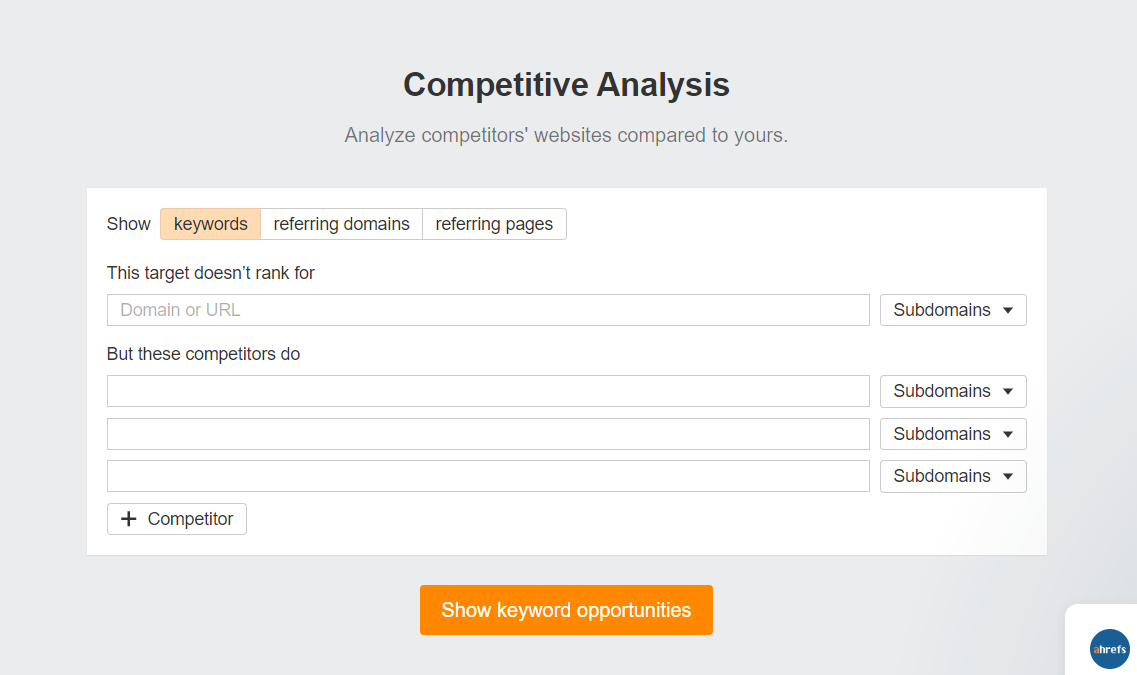
Tools like Ahrefs, Moz, and SemRush are ideal for this goal. They’ll provide valuable insights such as content gap analysis that will reveal what keywords your competitors are ranking for that you are not and vice-versa. That alone can help you craft a content calendar that will serve as a pipeline for your content marketing team for months to come.
They’ll also provide valuable off-page SEO insights, such as their backlinking strategy. This includes information like the number of links they’re getting from other websites, the type of websites (tech, B2B, eCommerce, educational, etc) that are linking to them, the types of links, and more.
As you perform this part of your competitor analysis, remember that not all SEO strategies work for everyone. Try to identify the strategy that gives each competitor a competitive advantage and then develop your own take on it to suit your business goals.
Pro Tip: Not all SEO strategies work for everyone. Adapt successful strategies to fit your business goals.
9. Prepare a list of flaws and highlights.
The last step of the process is to integrate every bit of information you acquired into a spreadsheet so you can get a high-level view of your competitive landscape. With this information at hand, you’ll have a clear view of where each competitor excels and where they fall short, so make a list of all the flaws and highlights of each competitor. This summary will be the main output of the entire competitor website analysis.
Pro Tip: Use this summary to identify areas where you can outperform competitors and develop strategies to address their strengths and weaknesses.
How to Apply Your Competitor Website Analysis
You can do many things with all the information you just compiled. However, the first thing you should do is to perform a strengths-weaknesses-opportunities-threats analysis (SWOT analysis) using your competitors’ flaws and highlights as well as your own.
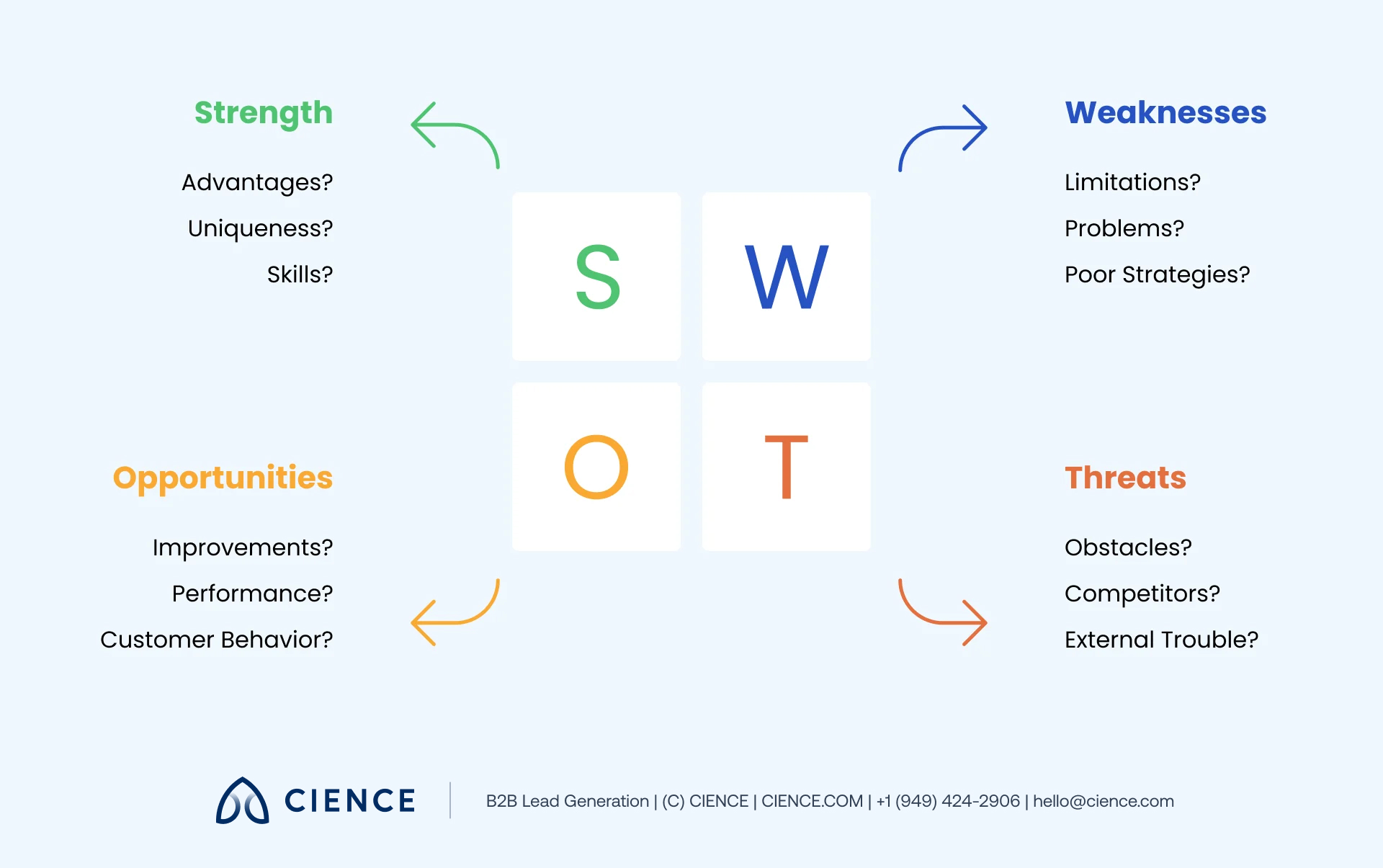
Your competitors’ common flaws will be your opportunities, i.e., the areas where you can improve upon your competition to gain an edge in the eyes of the market. The things your competitors do better than you represent threats. On the other hand, your biggest wins compared to the competition are your strengths, while your flaws are your weaknesses.
A SWOT analysis will help you define a digital marketing strategy that will help you outperform your competitors. It can also help you detect weaknesses in your organization and fix them before the competition finds a way to exploit them.
Get Insights to Grow Your Business
Performing a competitor website analysis can help you define your own digital marketing strategy and find weaknesses in your organization, as well as opportunities for growth that you may not have considered before. As such, this process should be an integral part of any company’s online strategy, providing insights into how to compete with other companies on the web.