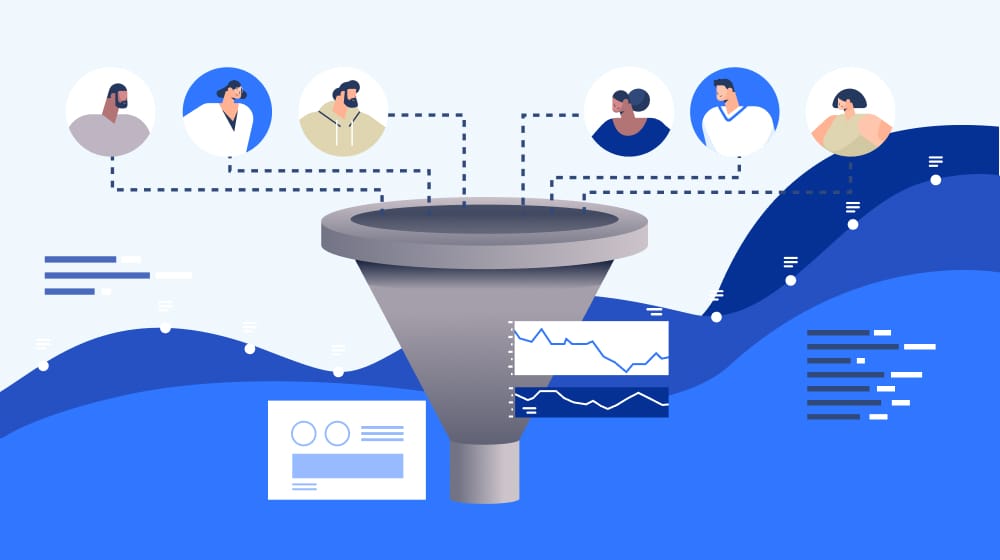
Leads have shown initial interest but haven't been contacted. Prospects are leads a sales rep has engaged in two-way communication. Opportunities are qualified prospects actively considering a purchase — typically representing fewer than 25% of original leads. Each stage demands a different outreach strategy, from first-touch email to proposal and negotiation.
Last Refreshed: March 2026 with updated statistics, comparison table, and conversion benchmarks.
Leads, prospects, and opportunities represent three distinct stages of the B2B sales funnel: leads have shown initial interest, prospects have engaged with a sales rep, and opportunities are qualified buyers actively considering a purchase. In B2B sales, these terms are often used interchangeably — but treating a lead like an opportunity is one of the most common and costly mistakes a sales team can make.
From Quincy Berg, SDR Operations Lead, CIENCE: “Most sales teams waste 30–40% of their outreach on contacts that were never real leads to begin with. The fastest path to more closed deals is strict stage-gate criteria: no rep should treat a contact as a prospect until there’s been genuine two-way engagement, and no prospect becomes an opportunity without verified budget, authority, and timeline.”
Each stage requires a different type and amount of engagement — you can’t give a lead the same attention as an opportunity. Understanding the differences lets you more accurately assess where a potential customer is in their buyer’s journey and how best to move them forward. CIENCE works with 2,500+ clients across 250+ industries helping teams navigate exactly this challenge.
In this post, we define each term and explain how the distinctions shape your B2B lead generation strategy.
B2B Sales: Leads vs. Prospects vs. Opportunities
In the B2B sales pipeline, several stages of engagement are required before an organization becomes a paying customer.
At the top of the funnel, we have leads. With a great lead generation strategy, you convert them to prospects, and eventually, opportunities.
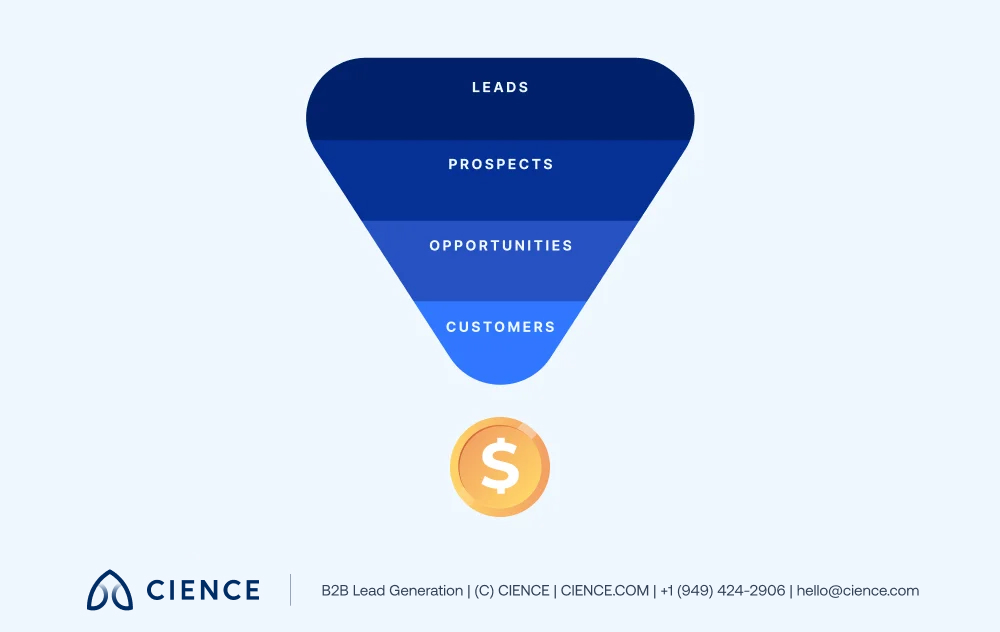
Each stage of the funnel pushes qualified leads forward and drops those who aren’t a fit. If you have 100 leads, roughly 50 will become prospects. Of those, fewer than half will become qualified opportunities.
Here’s how the three stages compare at a glance:
| Lead | Prospect | Opportunity | |
|---|---|---|---|
| Definition | Showed initial interest | Engaged in two-way communication with a rep | Qualified and actively considering purchase |
| Contact status | Not yet contacted | Conversation started | Deep qualification complete |
| Sales action | Initial outreach — email or call | Discovery conversation, demo | Proposal, negotiation |
| Typical conversion | ~50% become prospects | ~20–30% become opportunities | ~30–50% close as customers |
| Funnel stage | Top of funnel (TOFU) | Middle of funnel (MOFU) | Bottom of funnel (BOFU) |
By the time you reach the bottom of the funnel, you should have a small set of qualified opportunities that are ready to buy. The further down the funnel, the higher your probability of closing.
What Makes Leads, Prospects, and Opportunities Different?
Now that we understand where each term falls in the sales funnel, let’s discuss what makes them different and how best to approach each stage.
Leads: Those who are simply interested
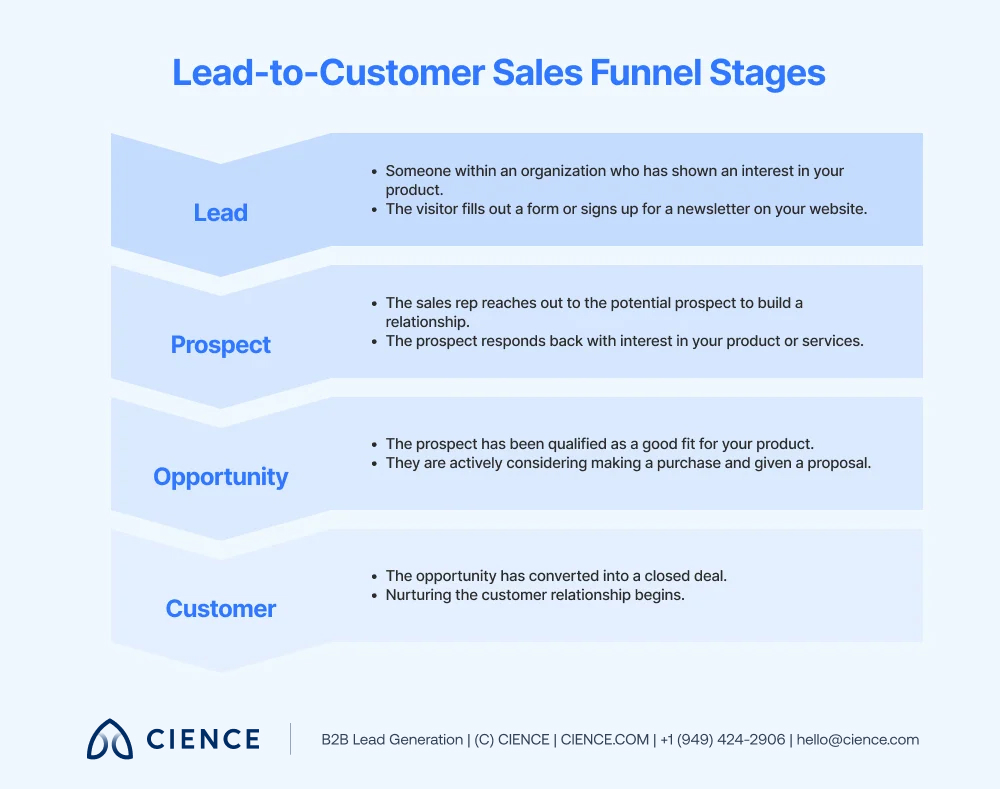
A lead is someone within an organization who has shown an interest in your product or service. They might have filled out a form on your website, subscribed to your newsletter, or downloaded a resource. Critically, they haven’t been contacted by a sales rep yet.
For example, if you’re a SaaS company, someone who signs up for your free trial is a lead. Even someone who submits their email to view a gated explainer video would qualify. A lead might need your product — but you won’t know until you engage with them directly.
What makes leads worth pursuing?
Leads are valuable because they’ve already been exposed to your brand and shown curiosity. They’re a signal of market interest — and a source of feedback on what your ICP actually responds to.
Leads who match your sales targeting criteria and show behavioral signals (repeat visits, specific page views, content downloads) are worth prioritizing over passive subscribers. Use intent data to identify which leads are actively researching solutions like yours.
How do you convert leads?
The goal is to initiate contact and gauge real interest — not to sell. Reach out via cold email or phone call. Be respectful of their time: introduce yourself, explain the value you deliver, and ask a question that invites a response.
Keep it short. If they respond, you have a prospect.
Prospects: They want to be friends
The more high-quality leads you generate, the more chances you have of finding qualified prospects. A prospect is a lead who has been contacted by a sales rep and responded — establishing two-way communication.
That response, however small, is the dividing line between a lead and a prospect.
What makes prospects worth pursuing?
Prospects have already shown interest and are now in active conversation with your team. You’ve started building a relationship. You have a general sense of what they need. That context makes them far more valuable than an untouched lead.
Prospects are further along in the buyer’s journey, which means your time invested here has a much higher ROI.
How do you convert prospects?
The goal is to deepen the relationship and uncover fit. Find out their pain points, the solutions they’re evaluating, and whether your product can genuinely help.
This is where discovery happens. Use one-on-one outreach — phone, video call, or in-person meeting. Share case studies, demo videos, or testimonials that address their specific situation. The key is working backward from their perspective, not pitching from yours.
At this stage, omnichannel outreach — coordinating email, phone, and LinkedIn — significantly improves conversion rates.
Opportunities: One step closer to closed
An opportunity is a prospect who has been qualified as a strong fit for your product or service. They’re actively considering a purchase — comparing vendors, reviewing terms, or in negotiation.
At this stage, you’ve confirmed: there’s a real need, budget exists, and the decision-maker is engaged.
What makes opportunities worth fighting for?
They’re ready to buy. You know the need is real and your product can address it. The hard qualification work is done — now it’s execution.
Opportunities represent your highest-leverage time investment. Close rates on properly qualified opportunities typically run 30–50%, versus single-digit percentages for cold leads.
How do you convert opportunities into customers?
Send a proposal that clearly outlines your solution, pricing, timeline, and terms. Make it easy for them to say yes.
After sending, follow up within 48 hours. Ask if they have questions. Anticipate objections before they arise. Be prepared to negotiate on terms — but know your floor on pricing and scope before those conversations start.

Build More Sales Opportunities
Understanding the difference between leads, prospects, and opportunities lets you build a targeted outreach strategy that closes more deals with less wasted effort. The work is to keep generating leads, qualify them into prospects quickly, and only advance the ones with real potential to opportunity stage.
At every stage, it’s the relationship that determines whether a contact moves forward or falls off. Be human and approachable first — and precise about qualification second.
“We hit a 10% conversion rate with 150 qualified companies in our pipeline. CIENCE helped us understand exactly which leads were worth pursuing and which ones we should cut loose earlier.” — Turn Technologies
If your pipeline is full of leads that never become opportunities, the problem isn’t effort — it’s qualification architecture.
CIENCE + graph8 pricing: $5,000 one-time GTM system setup, $2,499/mo strategic execution, and the graph8 platform at $499/mo. No long-term contracts. See full pricing →
Whether or not you decide to work with us, you’ll walk away with a clear picture of where your pipeline is leaking and what it would take to fix it.
“CIENCE set over 190 appointments for us — most of them directly with CEOs and founders. It gave us a predictable, scalable process we couldn’t build internally.” — Stage 1 Financial
Frequently Asked Questions
What is the main difference between a lead and a prospect?
A lead is someone who has shown initial interest in your product or service — such as filling out a form or subscribing to a newsletter — but has not yet been contacted by a sales rep. A prospect is a lead who has been contacted and responded, establishing two-way communication. The key distinction is engagement: leads are passive, prospects are active.
When does a prospect become an opportunity?
A prospect becomes an opportunity when they’ve been qualified as a strong fit for your product or service and are actively considering a purchase. This typically means they have a demonstrated need, budget authority, and a buying timeline. At this stage, your sales team shifts from relationship-building to presenting proposals and negotiating terms.
How can I improve my lead-to-opportunity conversion rate?
Focus on lead quality over quantity by defining a clear ideal customer profile (ICP) and using intent data to prioritize outreach. Nurture leads with relevant content at each funnel stage, and ensure your sales and marketing teams align on qualification criteria. Companies that align sales and marketing see up to 36% higher customer retention rates and significantly shorter sales cycles.

A graph8 company — AI-powered GTM execution across 250+ B2B industries.
graph8 Platform
From $499/mo
Run your own GTM campaigns with AI-powered data, sequences, and analytics.
Start Free — 2,500 Credits No credit card requiredCIENCE Managed
From $2,499/mo
Our GTM teams build and run your outbound campaigns end-to-end.
15-min call · No commitment2,500+ B2B companies served · Month-to-month contracts · See full pricing →