
What Is Link Juice and How Does It Impact Your SEO?

Last Refreshed: March 2026 with updated statistics and tool information.
Have you heard the term “link juice?” If not, that’s okay. Even if you have heard it, you might not really understand what it means. It’s an important piece of search engine optimization (SEO) but is often overlooked by busy business leaders and marketers who have a million other things to focus on each day—not to mention that 65% of marketers believe that link building is the most difficult part of SEO. But fear not! This guide will break down what link juice is and why it’s crucial for great SEO.
What Is Link Juice?
The phrase “link juice” refers to the value that one web page transmits to another through links. The links between two pages boost the end site’s authority, meaning Google and other search engines will take notice and account for this when determining which position in the search engine results pages (SERPs) a particular page should land on.
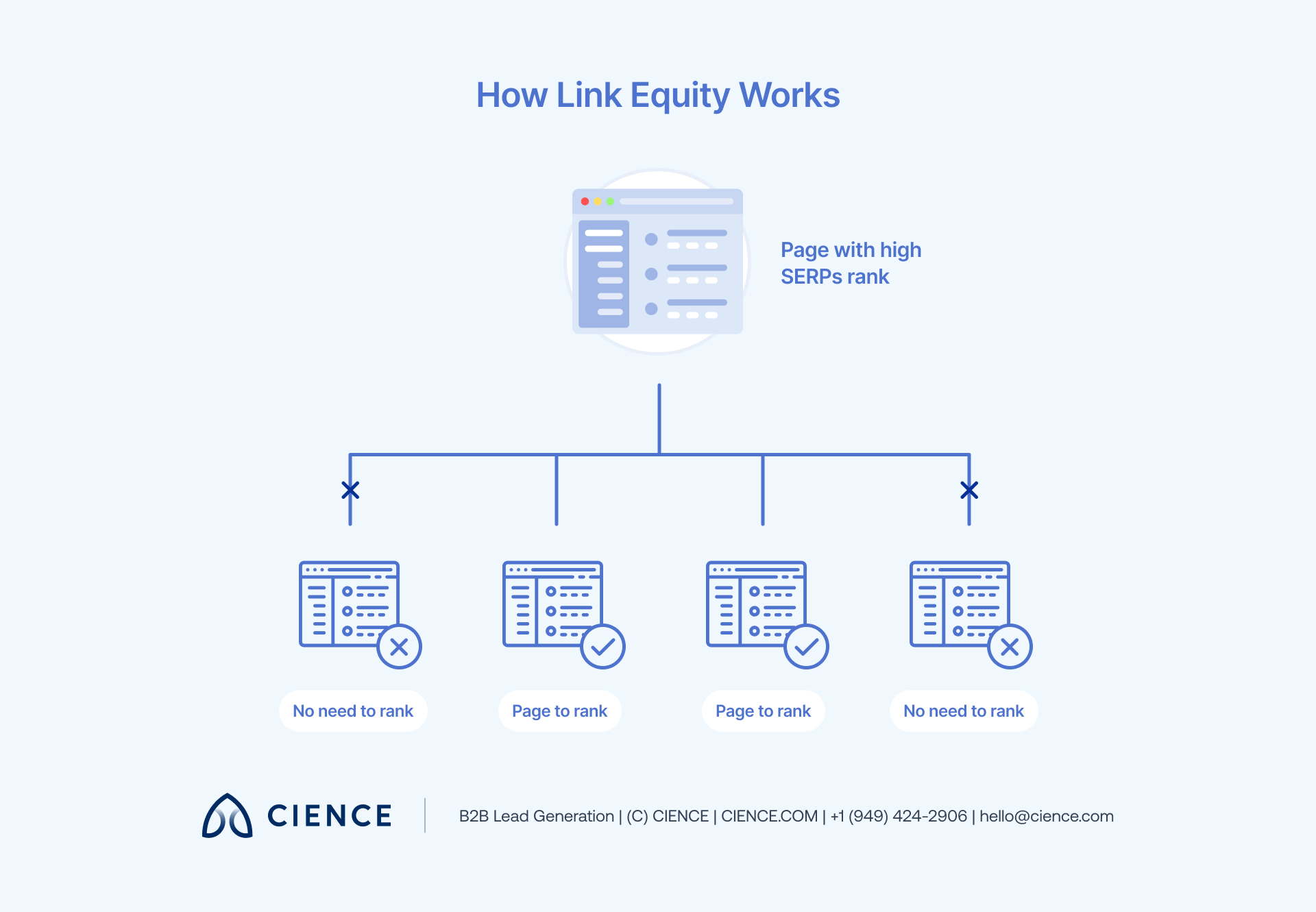
You might also hear link juice referred to as link equity. When your business earns backlinks, or inbound linking, from other pages outside of your own URL, you’ll generate more link juice. You can also generate link juice by linking to your own internal URLs by referencing pages such as blogs and product information links. Although this certainly isn’t the sole criteria search engines look at, it’s one of the more important ones in SEO link building.
In short, the more high-quality links you earn, the more link juice you’ll garner in your favor.
How Does Link Juice Work?
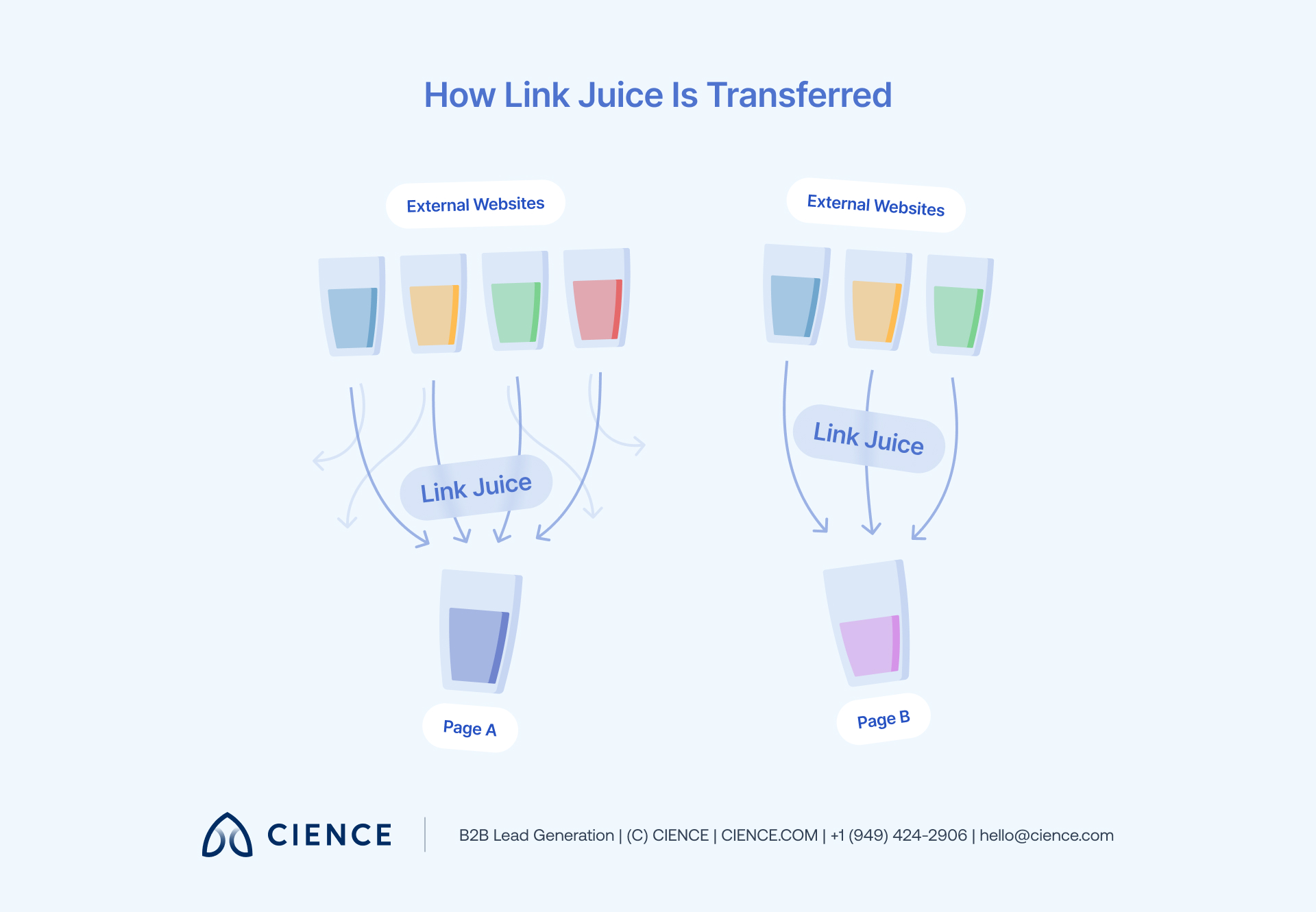
Each link offers a particular value—not only to the actual destination page but also to any other linked pages. The value (which is the juice) can then be distributed among different pages linked together. Think about it like a pyramid of glasses—when you pour too much liquid into the top of the pyramid, the water will automatically begin to disperse evenly to the glasses below it.
Here’s another example: Consider two websites are identical, except for one thing. Website X gets one link from an outside source, but Website Y has no links. When all other things are precisely equal, Website X will rank higher because it has link juice that’s been passed on by an outside site.
Again, don’t forget about internal linking. It has been shown to produce higher ranks in many cases. The more internal or external links that go to your pages, the better off you’ll be.
What’s the Difference Between Link Juice and PageRank?
PageRank is Google’s real assessment of how much authority a given page has, but it’s often mistaken with link juice. Not all links produce the power of link juice. You should be targeting sites with high domain authority because those are seen as more trustworthy by Google and other search engines and, thus, generate more link juice.
Google uses PageRank as a ranking signal to determine a page’s placement within the SERPs. Again, it’s not the only factor, but it’s certainly one to pay attention to. It assigns a numerical value to pages and scores them between zero (low-quality) and ten (most authoritative) before the algorithms factor in other elements to determine where a page will be featured when users search for specific terms.
In other words, link juice and PageRank may be related, but they’re not the same thing.
How Is Link Equity Calculated?
When the search engines analyze the links that point to your site, they’re going to consider a few things, such as:
- Significance: Is the content relevant to what people seek when they search for specific terms?
- Trustworthiness: Search engines prioritize the most trusted sources.
- Follow references: Google won’t identify your site with the linking page if you use nofollow links.
- Crawlability: If Google can’t crawl your link, it won’t pass.
- Location: Search engines use site architecture to determine which elements are most valuable to visitors. Sometimes, footer links may not be as beneficial as links within the body of the content itself.
- Quantity: If there are a million other links on a page, the link you’re going for will probably lose its value.
A lot goes into link equity, but these are a few things the search engines are looking at when deciding where to rank your site’s pages.
What Is Domain Authority?
We’ve mentioned “authority” a few times, so let’s cut to the chase and dive right into this big topic. “Domain authority” (also sometimes just referred to as “authority”) is something every site has—some have more than others. It’s a search engine ranking score that Moz developed. It’s used to predict how likely a site will rank in the SERPs.
According to the uSERP State of Link Building report, 65% of marketers believe domain authority/domain rating is the most important metric for backlink quality. Sites with high domain authority are seen as more likely to appear at the top of search engine results pages.
In contrast, those with low domain authority will likely find themselves pages and pages back when someone searches for applicable keywords.
Factors That Influence Link Juice
Now that you understand a little more about what link juice is, you’re probably wondering if there’s anything you can do to enhance your site’s organic standing through link juice. While algorithms are a mysterious engine that works behind the screens, there are some things for you to be aware of:
1. Nofollow links
Way back when (it actually wasn’t that long ago!), digital strategists would create nofollow links for pages they didn’t want to direct authority rankings. The goal was to direct available authority toward specific links. However, when Google updated its algorithm, this technique became obsolete. Now, all links are considered, but the percentage attributed to the nofollow links is wasted.
2. 404 errors
The more blogs and pages you have, the more possible it will be for you to link to a page that no longer exists, which results in a 404 page. If you delete any pages, you need to double-check to ensure you also remove any links that link back to that page. If you don’t, the user will see a resulting 404 page, which is frustrating to humans, but it will also cause the search engines to view your site negatively.
3. Duplicate content
An estimated 90% of marketers use content pieces as their main way to generate more backlinks. Yet, you never want to use the same content on multiple pages on your site; your content needs to be completely original and unique across the board, without any sort of plagiarism. If your content is too similar, the search engines will consider it duplicated, meaning only one of the two pages will be chosen to showcase in the SERPs, and you won’t have a say over which page gets selected. The best way to ensure your content’s uniqueness is to get your content checked via a good plagiarism checker before publishing it online.
4. Disavow
You can get backlinks from any site on the internet, which means, sometimes, you may get “credit” from an unreliable source. Usually, search engines can distinguish good sites from bad ones, but it’s still up to you to check and see where your backlinks are coming from. If you happen to get a link from a site that can damage your site’s reputation, use the Reject link (disavow link) in Google’s tools to eliminate the unwanted follow.
Maximize Your Link Building Strategy
If you’re still not sure what link juice is or how it’s impacting your SEO efforts, consider working with an SEO backlink provider that can help you understand the importance of link building to your search engine rankings. As an integral part of your SEO strategy, link juice can be a great way to improve Google rankings, build brand awareness, and establish yourself as a reputable resource in your industry.