
Best Outbound Sales Software in 2026: AI-Native Tools for Modern B2B Teams

Last Refreshed: March 2026
Most outbound sales teams are running 2020 playbooks in 2026. They bought a sequencer, plugged it into their CRM, and called it “automation.” And they wonder why reply rates are in the gutter.
Here’s the truth about where outbound software actually stands: we’ve gone through three distinct eras, and the gap between teams that recognize this and teams that don’t is getting wider every quarter.
Era 1 — The Sequencer Era (2015–2019): Email automation tools like Outreach and SalesLoft disrupted the market. Reps no longer hand-typed follow-ups. “Personalization” meant inserting a first name. Volume was the strategy.
Era 2 — The Multichannel Era (2020–2024): Platforms added LinkedIn, phone, and SMS touches. Sequences got more sophisticated. Intent data started appearing in the conversation. Apollo.io exploded in the mid-market by bundling a database with a sequencer. Most B2B teams today still live here — multichannel in theory, batch-and-blast in practice.
Era 3 — AI-Native Execution (2025–2026): This is where we are now. The tools that matter aren’t just automating sends — they’re generating sequences from ICP signals, enriching contacts in real time, surfacing intent-ready accounts before your reps even log in, and adapting outreach based on what’s actually working. The best implementations don’t just have AI features bolted on; they’re built AI-first.
Most companies are still in Era 2. This post is for teams that want to operate in Era 3 — and want a clear-eyed look at what the software landscape actually offers to get there.
What to Look for in Outbound Sales Software in 2026
Before we get into the tools, here are the criteria that actually matter right now:
AI personalization capability. Not “we use AI” marketing copy — can the platform generate contextually relevant, account-specific messaging from real signals? Does it learn what’s working and adapt?
Deliverability infrastructure. Cold email is harder than it was two years ago. You need inbox placement, domain warming, spam testing, and sending infrastructure built in — not an afterthought. If the tool can’t speak intelligently to deliverability, move on.
Intent signal integration. Real-time intent data determines who to contact before your competitors do. Tools that surface in-market accounts via first-party behavior (site visits, content engagement) and third-party signals (topic spikes, tech install changes) give reps a massive timing advantage.
Human+AI hybrid options. Software can do a lot. But closing pipeline still requires humans. The most effective outbound programs in 2026 aren’t choosing between AI tools and human SDRs — they’re running both in concert. If your stack doesn’t have an answer for execution, that’s a gap.
The 13 Best Outbound Sales Software Tools for 2026
1. CIENCE GO Platform
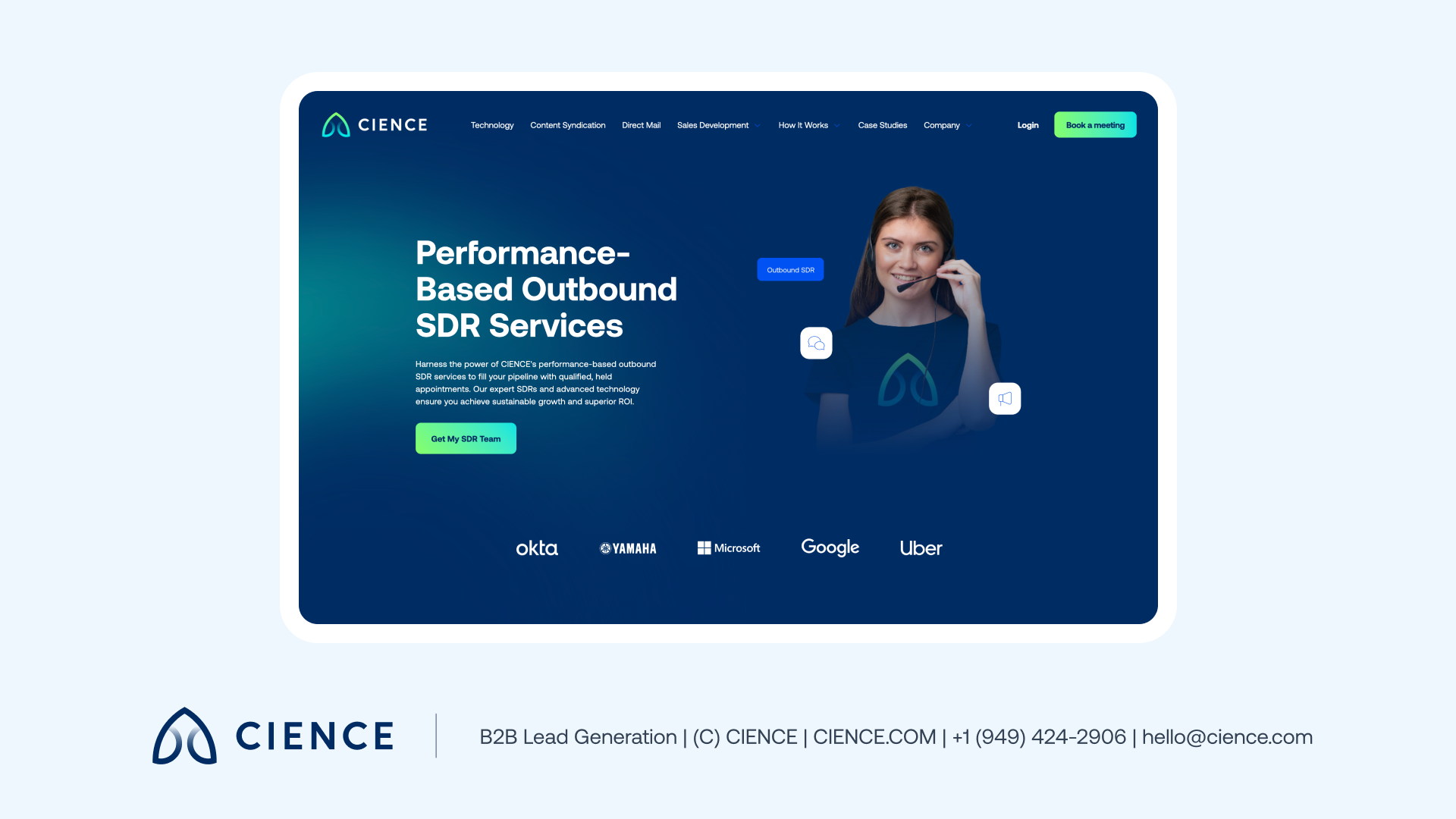
CIENCE GO is the only outbound sales solution that combines a full AI-native GTM software stack with dedicated human SDR execution — and that combination is the whole game. Built on graph8’s AI platform, CIENCE GO isn’t a single tool; it’s an integrated suite designed so every layer feeds the next.
GO Data gives you access to 140M+ verified B2B contacts with real-time enrichment, so your ICP targeting is built on accurate, current data — not a stale export from six months ago. GO Intent surfaces real-time buyer intent signals, identifying in-market accounts before your competitors even see the lead. GO Campaign AI generates multi-channel outreach sequences using AI — email, LinkedIn, phone, and more — personalized at the account and persona level, not just with a first-name token. GO Engage handles the execution layer, managing outreach cadences and coordinating touchpoints across channels. GO Digital brings programmatic advertising into the mix, so you can run coordinated paid and outbound campaigns that reinforce each other. GO Show tracks website visitors in real time and feeds those signals back into your active sequences, so a prospect who hits your pricing page gets a different next touch than someone who cold-visited your homepage. GO Analytics ties it all together with pipeline attribution, so you know exactly what’s driving meetings and revenue.
What separates CIENCE GO from every pure-software competitor on this list is the human SDR layer. CIENCE’s managed SDR teams work inside the GO platform — they don’t operate separately from it. This means AI-generated sequences get refined by experienced practitioners, intent signals get acted on by humans who can read a conversation, and clients get pipeline results — not just tool access. For B2B teams that have tried software-only stacks and found themselves still responsible for making it all work, CIENCE GO is a fundamentally different model.
Key Features: GO Data (140M+ contacts), GO Intent (real-time intent), GO Campaign AI (AI multi-channel sequences), GO Engage (outreach execution), GO Digital (programmatic ads), GO Show (visitor tracking), GO Analytics (pipeline attribution), managed SDR teams.
Pricing: Custom; contact for pricing based on scope and services.
Best For: B2B companies that want an AI-native outbound system with human SDR execution — not just another tool to manage.
Pros: The only solution combining software + managed execution; every module feeds the next; intent and data layers eliminate guesswork on who to target.
Cons: Not a self-serve point solution; designed for teams serious about outbound as a revenue channel, not one-person shops.
2. Outreach
Outreach is the enterprise-grade sales engagement platform (SEP) that helped define Era 2. Its automation capabilities are mature, its CRM integrations are deep, and its AI features — Kaia (call intelligence), Deal Grid (pipeline management), Smart Email Assist — show a platform making an honest push into Era 3. For large enterprise sales orgs with complex processes and dedicated RevOps teams to configure and maintain it, Outreach still earns its place.
Key Features: Email and call sequences, AI-assisted email writing, deal management, conversation intelligence, Salesforce and HubSpot integrations, advanced analytics.
Pricing: Custom enterprise pricing; typically $100–$150+ per user/month at scale.
Best For: Enterprise sales teams with complex multi-stage processes and RevOps capacity to manage configuration.
Pros: Battle-tested at scale; comprehensive automation; strong conversation intelligence.
Cons: Expensive; steep learning curve; heavy implementation lift; AI features feel additive rather than foundational.
3. Salesloft
Salesloft has evolved from a pure sales engagement platform into a “Revenue Orchestration” platform — their framing — particularly after the Drift acquisition brought conversational AI into the fold. The combination of engagement workflows, deal intelligence, and now conversational AI makes it a more complete picture than it was in 2022. It’s a strong choice for revenue teams that want engagement and coaching in one platform.
Key Features: Cadences (sequences), Conversations (call recording + AI coaching), Deals (pipeline intelligence), Drift integration (conversational AI), revenue forecasting.
Pricing: Custom; typically enterprise-tier pricing comparable to Outreach.
Best For: Larger revenue teams that want engagement, coaching, and pipeline intelligence unified.
Pros: Strong coaching and conversation intelligence; improving AI roadmap; Drift integration adds conversational layer.
Cons: Premium pricing; the Drift integration is still maturing; not ideal for lean teams without RevOps support.
4. Apollo.io
Apollo became the de facto tool for mid-market outbound teams by solving a real problem: most companies needed a database AND a sequencer, and Apollo bundled both at a price that didn’t require a procurement process. Its contact database is extensive (270M+ contacts claimed), its sequencing is solid, and its AI-assisted email features have improved considerably. It’s a good tool. It’s also crowded — because everyone is using it, and the contacts they’re emailing know it.
Key Features: Contact database (270M+ contacts), email and LinkedIn sequences, AI email writing, intent data layer (basic), CRM sync, call dialer.
Pricing: Free plan available; paid plans start at $49/user/month.
Best For: Mid-market and growth-stage B2B teams that need a database + sequencer without enterprise pricing.
Pros: Excellent price-to-feature ratio; easy to get started; large contact database.
Cons: Data quality is inconsistent at scale; ubiquity means lower deliverability lift; AI features are table-stakes level; no human execution layer.
5. HubSpot Sales Hub
If your company is already in the HubSpot ecosystem, Sales Hub is the natural outbound layer to reach for. The CRM-native approach means no sync headaches, and the combination of sequences, templates, meeting scheduling, and pipeline management in one place genuinely reduces friction. It’s not the most powerful tool on this list for high-volume cold outreach, but for inbound-heavy teams adding an outbound motion, it’s often the right answer.
Key Features: Email sequences, AI email writing (Breeze AI), deal pipeline, meeting scheduling, call recording, CRM-native reporting.
Pricing: Free plan available; Sales Hub Starter from $15/user/month; Professional from $90/user/month.
Best For: Teams already on HubSpot CRM that want to add structured outbound without switching platforms.
Pros: Seamless CRM integration; minimal setup; improving AI features via Breeze; good for blended inbound/outbound motions.
Cons: Not purpose-built for cold outreach at scale; limited deliverability tooling; less powerful sequencing than dedicated SEPs.
6. Reply.io
Reply.io punches above its price point for multichannel outbound. It covers email, LinkedIn, calls, SMS, and WhatsApp in a single platform, with AI assistance for sequence building and reply handling. Its Jason AI feature attempts agentic-style follow-up, which is directionally right even if not fully baked. For teams that want multichannel capability without Outreach or Salesloft pricing, Reply.io is worth a serious look.
Key Features: Multichannel sequences (email, LinkedIn, calls, SMS), Jason AI (AI SDR assistant), email validation, CRM integrations, reply detection and auto-classification.
Pricing: Starts at $49/user/month; higher tiers for advanced AI features.
Best For: Growing B2B teams running multichannel outbound who need affordable flexibility.
Pros: True multichannel in one platform; improving AI capabilities; good deliverability features; accessible pricing.
Cons: Jason AI is promising but inconsistent; reporting could be deeper; less polished UX than enterprise tools.
7. Lemlist
Lemlist carved out a niche with personalization-at-scale — specifically, the ability to embed personalized images and videos in cold emails. That’s still the core differentiator, and it works. Lemlist has since expanded into a broader multichannel platform (LinkedIn, calls) and added lemlist AI for sequence generation. The community around it is strong, and the cold email templates and resources are genuinely useful for teams building their playbook.
Key Features: Personalized image/video in emails, AI sequence generation, LinkedIn outreach, call steps, deliverability tools, template library.
Pricing: Starts at $39/user/month; multichannel plans from $59/user/month.
Best For: Teams that want creative, personalized cold email with a growing multichannel layer.
Pros: Standout personalization capabilities; strong community and content resources; improving AI sequence builder.
Cons: Personalization at scale requires setup time; multichannel features less mature than core email product.
8. Instantly.ai
Instantly is built specifically for high-volume cold email infrastructure — and it does that one thing exceptionally well. If your team sends tens of thousands of emails a month across multiple domains and needs domain warming, inbox rotation, and deliverability analytics built into the platform rather than bolted on, Instantly is purpose-built for that problem. It’s not trying to be a full SEP. It’s the infrastructure layer for cold email at scale.
Key Features: Unlimited email accounts (on paid plans), domain warmup, inbox rotation, deliverability analytics, basic sequence builder, lead management.
Pricing: Starts at $37/month for sending; Growth plan from $97/month.
Best For: High-volume cold email operations that need serious deliverability infrastructure.
Pros: Best-in-class deliverability tooling; unlimited sending accounts; strong for agency and high-volume use cases.
Cons: Limited as a standalone CRM or full SEP; not built for complex multichannel campaigns; requires pairing with enrichment/data tools.
9. Smartlead.ai
Smartlead is a newer entrant that competes directly with Instantly on the cold email infrastructure side, with some AI-powered sequence optimization layered in. It’s worth watching — the product has moved fast, the pricing is competitive, and its AI features for subject line testing and send-time optimization show genuine promise. For teams evaluating the deliverability-focused tools, Smartlead and Instantly are the two main horses.
Key Features: Unlimited mailboxes, AI-powered sequence optimization, deliverability monitoring, inbox rotation, lead scoring, CRM integrations.
Pricing: Starts at $39/month; Pro plan from $79/month.
Best For: Cold email at scale with AI-assisted optimization, particularly for agencies and high-volume senders.
Pros: Competitive pricing; fast product development; strong deliverability focus; AI optimization features.
Cons: Newer platform with less enterprise track record; support can lag demand; best paired with a richer data/enrichment tool.
10. Klenty
Klenty positions itself as the CRM-native sales prospecting tool — built specifically around tight integration with Salesforce, HubSpot, Pipedrive, and Zoho. If your team lives in one of those CRMs and wants sequences that feel native rather than synced, Klenty’s approach reduces the data fragmentation problem that plagues many outbound stacks. It covers email, phone, LinkedIn, and SMS, and its prospect research features add useful context to outreach without requiring a separate enrichment tool.
Key Features: CRM-native sequences, multichannel cadences (email, phone, LinkedIn, SMS), prospect research, intent-based triggers, A/B testing.
Pricing: Starts at $50/user/month; higher tiers unlock advanced CRM features.
Best For: Mid-market B2B teams that want tight CRM integration and don’t want to manage sync headaches.
Pros: Best-in-class CRM integration; solid multichannel capability; good A/B testing; clean interface.
Cons: Less known than Apollo or Outreach; intent data capabilities are limited compared to dedicated intent tools; not a data provider.
11. Mailshake
Mailshake is the accessible, no-frills cold outreach tool — and there’s genuine value in that positioning. It’s easy to set up, covers email and phone, and has a LinkedIn integration through its Dialer. For small teams or early-stage companies running their first structured cold email campaigns, Mailshake reduces the barrier to entry without requiring a RevOps team to configure it. It’s not trying to be Outreach. It’s trying to help a 3-person sales team get moving fast.
Key Features: Email sequences, phone dialer, LinkedIn integration, AI email writer, A/B testing, lead management, analytics.
Pricing: Starts at $58/user/month.
Best For: Small sales teams and early-stage companies running cold email and basic multichannel outreach.
Pros: Fast setup; affordable; intuitive interface; good for teams new to structured outbound.
Cons: Limited advanced analytics; not built for enterprise complexity; deliverability tooling is basic.
12. Lavender
Lavender isn’t a sequencer — it’s an AI email writing assistant that lives inside your existing tools (Gmail, Outlook, Outreach, Salesloft, Salesforce, Apollo, and more). It analyzes your emails in real time, scores them for likely reply rate, and suggests specific improvements: shorter sentences, stronger openers, removing features-speak. The data it surfaces from millions of emails is genuinely useful for coaching newer reps and breaking bad email habits at scale.
Key Features: Real-time email scoring and suggestions, AI personalization assist, manager analytics (team-wide email quality tracking), integrations with major SEPs and email clients.
Pricing: Free plan available; Individual Pro at $29/month; Manager plan for team analytics.
Best For: Sales teams that want to improve cold email quality across the board — particularly useful for teams coaching multiple reps.
Pros: Works inside your existing stack; strong coaching use case; data-backed suggestions; affordable.
Cons: Not a standalone outbound platform — you still need a sequencer; value depends on your team’s email volume and coaching culture.
13. Clay
Clay is the workflow builder that has become essential for teams serious about AI-enriched outbound. The core concept: pull prospect data from dozens of sources (LinkedIn, Apollo, Clearbit, Hunter, company websites, news, and more), run AI-generated research and messaging logic against each record, and push ready-to-send sequences into your sequencer of choice. For RevOps teams and growth engineers, Clay enables a level of hyper-personalization that wasn’t possible a few years ago. It’s a power tool that rewards investment in setup.
Key Features: 75+ data provider integrations, AI research and enrichment workflows, Claygent (AI researcher), waterfall enrichment, CRM sync, export to sequencers.
Pricing: Free plan (100 credits/month); paid plans from $149/month; credits scale with usage.
Best For: RevOps teams and growth-focused orgs that want to build AI-enriched, hyper-personalized outbound workflows.
Pros: Unmatched enrichment flexibility; enables true AI personalization at scale; growing integrations ecosystem.
Cons: Requires technical setup and ongoing maintenance; not a sequencer on its own; credit costs add up at volume; steep learning curve for non-technical users.
CIENCE vs. The Alternatives: Software-Only vs. Software + Human SDRs
Here’s the comparison that most software review posts avoid making directly: every tool on this list, except CIENCE GO, hands you software and leaves execution to you.
That matters more than most teams realize when evaluating outbound software. The gap between “we have the tool” and “we’re getting pipeline from it” is almost always about execution — the people running sequences, interpreting signals, refining messaging week-over-week, and knowing when to push and when to back off.
What software-only gives you:
- Sequencing and automation infrastructure
- Data access and enrichment
- Analytics on what happened
- AI assistance with content generation
What software-only leaves you responsible for:
- Hiring, training, and managing SDRs
- Developing and refining messaging strategy
- Acting on intent signals and adjusting sequences in real time
- Diagnosing underperformance and making changes
What CIENCE GO adds:
- Managed SDR teams embedded in the same platform your data, intent, and sequences run on
- Campaign strategy development from practitioners who run outbound at scale
- Real-time optimization — not quarterly check-ins
- B2B sales outsourcing without sacrificing visibility into what’s happening
The right answer depends on your situation. If you have a strong SDR team and just need better tooling, tools like Outreach, Clay, or a GO Data + Instantly combination might be the right stack. If you want outbound to produce pipeline without building an entire internal SDR infrastructure, CIENCE GO is the only solution on this list that’s designed for that outcome.
For teams somewhere in the middle — have some SDRs, want better AI tooling, want expert support on strategy — CIENCE GO’s hybrid model covers all three.
Frequently Asked Questions
What’s the difference between a sales engagement platform (SEP) and outbound sales software?
The terms overlap, but SEPs (Outreach, Salesloft, Reply.io) focus specifically on managing and automating the outreach sequence — emails, calls, LinkedIn touches. “Outbound sales software” is a broader category that includes SEPs, cold email tools (Instantly, Lemlist), data/enrichment tools (Clay, Apollo’s database), intent platforms (GO Intent), and managed services (CIENCE). Most outbound stacks combine multiple tools across these categories.
How important is deliverability in 2026?
Critical. Google and Microsoft have tightened authentication requirements (SPF, DKIM, DMARC are now table stakes), and inbox algorithms have gotten significantly better at detecting pattern-based cold email. Domain warming, inbox rotation, and dedicated sending infrastructure are no longer optional for high-volume outreach. Tools like Instantly and Smartlead are purpose-built for this. Any tool you evaluate should have a clear answer on deliverability.
Do I need intent data for outbound to work?
You don’t need it — but teams using real-time intent data have a meaningful timing advantage. Reaching out to a prospect who just researched a problem you solve is a fundamentally different conversation than cold outreach with no signal. Intent data isn’t a magic button, but it meaningfully improves connect rates and qualification quality when operationalized correctly.
What’s the best outbound sales software for a small team?
For small teams (1–5 reps), the combination that gets you started fastest: Apollo.io for data + sequences (all-in-one), Lavender for email quality, and Instantly or Smartlead if you’re going high-volume on cold email. If you want managed execution and don’t want to staff up, CIENCE’s SDR team model is worth a conversation — it often costs less than hiring and training your own SDRs.
How does AI actually improve outbound sales results?
In three ways that matter. First, AI-generated personalization at scale — using real account signals (job changes, funding rounds, tech installs, content engagement) to write relevant, specific outreach instead of generic templates. Second, timing optimization — surfacing in-market accounts via intent signals so reps focus on prospects who are already looking. Third, continuous optimization — learning from what’s working (reply rates, meeting rates, win rates) and adjusting sequence logic accordingly. Tools that do all three well are operating in Era 3. Most tools are still doing one.
The Bottom Line
Outbound software in 2026 is not a solved problem. The tools are better than they’ve ever been. But better tools in the hands of the same process produce marginally better results. The teams seeing step-change improvement in pipeline are combining AI-native tooling with disciplined execution and — increasingly — human expertise that knows how to work with AI, not just deploy it.
If you want to see what Era 3 outbound looks like in practice, CIENCE GO is the only platform on this list built end-to-end for that model.