Search intent is the reason behind a search query, and it falls into 4 types: navigational, informational, transactional, and commercial. Matching content to intent boosts conversions because 88% of B2B leaders use web searches to research vendor solutions. Optimize by analyzing top-ranking content, checking related searches, and aligning each page to a single intent type.
Last Refreshed: March 2026 with updated statistics and tool information.
Search intent is the underlying reason a user types a query into a search engine, and it falls into four types: navigational (finding a specific site), informational (learning something), transactional (buying), and commercial (comparing options before purchase). If you’re like most online business owners, you’re always looking for ways to improve your website’s conversion rate. After all, the more visitors you convert into customers, the more successful your site will be.
From Thomas Cornelius, Founder & CEO, graph8: “Search intent isn’t a content tactic — it’s a GTM signal. When you know what a buyer is looking for at each stage, you can put the right asset in front of them before any human interaction ever happens. That’s how SEO becomes a pipeline engine, not just a traffic channel.” Luckily, there are several techniques you can use to increase conversions. These include improving your page design, using persuasive copywriting, and optimizing your sales pitches. But one of the most overlooked factors in conversion optimization is search intent.
By taking the time to understand what people are looking for when they enter specific keywords into a search engine, you can craft a content strategy that is much more likely to result in a sale.
This article will explain search intent and how you can optimize it to improve your conversion funnel.
What Is Search Intent?
Search intent is simply the reason someone performs an online search. It could also be defined as the outcome online users hope for when they type their queries into a search engine.
By understanding the user intent behind a search, you can optimize your website and marketing campaigns to better align with what potential customers are looking for. This can ultimately lead to more conversions.
There are four main types of search intents:
- Navigational intent: The searcher is looking for a specific website or page (e.g., “Twitter login”).
- Informational intent: The searcher seeks information on a topic (e.g., “how to run effective email marketing campaigns”).
- Transactional intent: The searcher is looking to buy something (e.g., “Salesforce enterprise pricing”)
- Commercial intent: The searcher is comparison shopping or looking for more information before buying (e.g., “best project management tools for small businesses”).
Each type of search intent corresponds to a different stage in the buyer’s journey. Therefore, each search intent requires a different approach if you want to convert searchers into customers.
For example, if you’re targeting commercial searchers, your content ideas should be focused on helping them find the right product or service. And if you’re targeting transactional searchers, your content should be focused on helping them make a purchase.
Why Does Search Intent Matter for SEO?
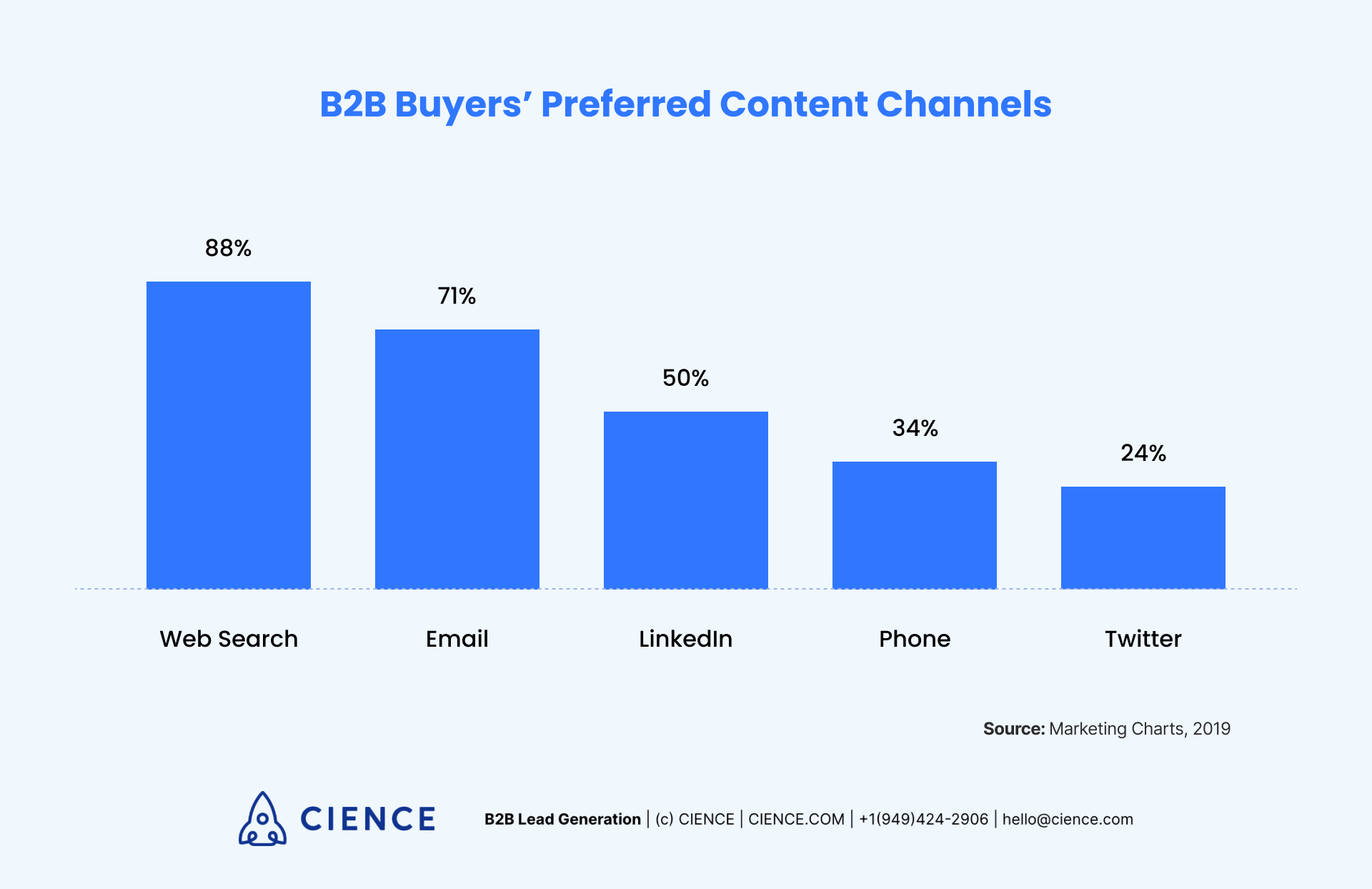
B2B buyers often seek detailed information about specific solutions in their buyer journey. They want to know how each solution works, its benefits, and how it compares to other options. According to a poll, 88% of B2B leaders use web searches to study vendor solutions and consume content.
So, if you can provide high-quality content that meets their needs at each stage, you’ll be more likely to attract leads from search engines. And the best way to do so is to create content for search intent.
Understanding search intent helps you create content that will answer the searcher’s question, provide them with the information they need, and guide them toward the next step in their buying journey. You will also better determine which keyword lists to target in your SEO strategies.
Also, you can generate an entire content marketing strategy that keeps leads interested from beginning to end. You’ll know which content ideas to focus on and which ones to avoid. Your content creation will gain depth and insight, impressing your audience and enhancing their experience.
It doesn’t just stop with the users, either. Search engines such as Google also seek content types that achieve user satisfaction. Think about it. Search engines are always seeking to deliver a great user experience.
One way to do that is by ensuring that users’ queries are answered correctly. Therefore, if you align your types of content to fulfill the user search intent of your search term, you can expect better performance on the search results.
How to Optimize Search Intent for B2B
As a B2B marketer, you know that understanding and catering to relevant search intent is essential to success. After all, how can you hope to deliver the type of content your audience needs if you don’t know what they’re looking for?
Fortunately, optimizing search intent is not as difficult as it may seem. With a bit of planning and execution, you can ensure that your content is always aligned with what your audience is looking for. Here are a few tips to get you started:
1. Analyze content that is ranking.
Reviewing search engine results pages is a straightforward way of determining the intent of search phrases. Simply start by searching for your target keywords. Then, pay attention to the content that ranks and determine what makes it enticing to searchers and search engines.
How is the content written? Is it providing general information or reviewing a product? Then, ask yourself: What can I learn from this content to grow my B2B website by writing relevant content?
Suppose the top results are all informational blog posts, like a how-to or a step guide. In that case, the searcher is likely looking for informational content, and the intent is informational. However, if the top results are related to products or services, then it’s more likely that the searcher is looking to buy something and the intent is commercial or transactional.
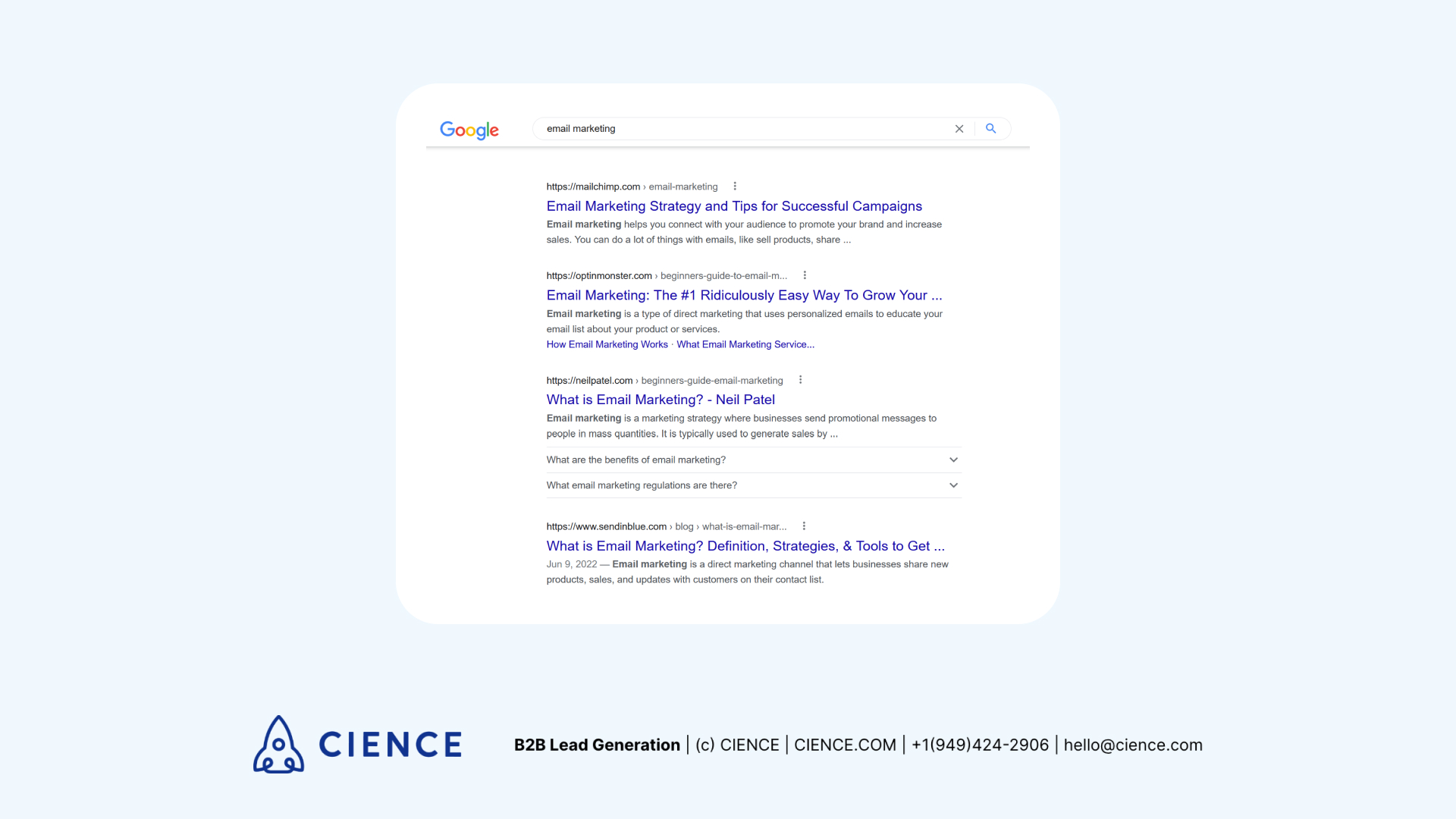
For instance, if you type “email marketing” into a search engine, the top results include definitions, strategies, and best practices. That shows that the keyword “email marketing” has an informational intent.
But, when you search for “email marketing software,” the top results list the best software available rather than any informative content. There are no guides, tutorials, or tips. That indicates the keyword has a commercial intent.
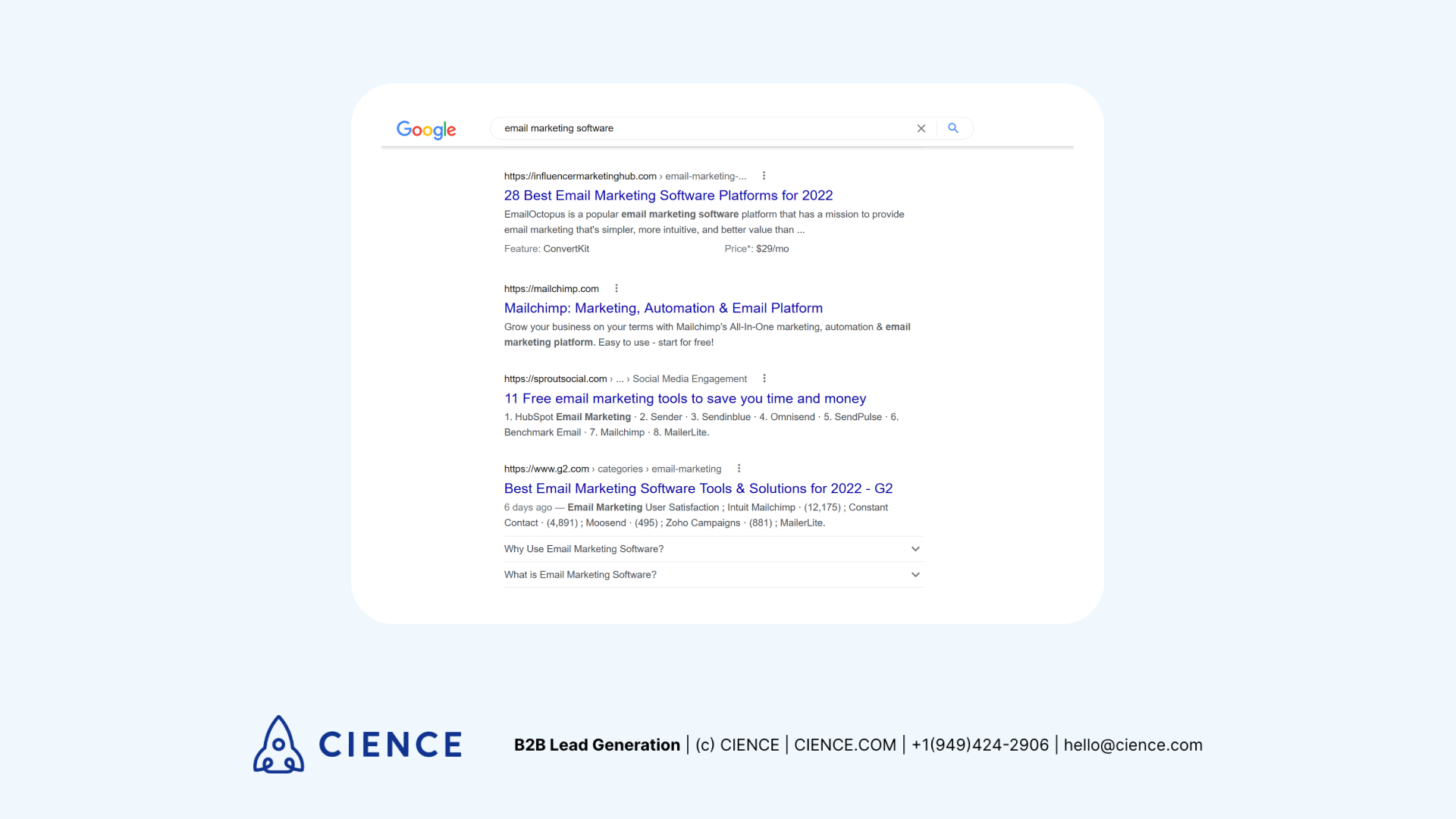
Therefore, you can quickly know how to approach different keywords by looking at the ranking content. Use content gap analysis to write an optimized piece of content that aligns with the search intent and user expectations.
2. Look at the related searches.
Related searches are a great way to see what people search for around the same topic. They provide insight into other keywords users need to find content with search intent relevant to your company. Also, they help you expand your content topics to meet all the search intent around one topic.
Each related search may have a different search intent. For example, in the related search below, you can see different types of search intent. For example, project management tools have a commercial search intent while project management steps have an informational intent.
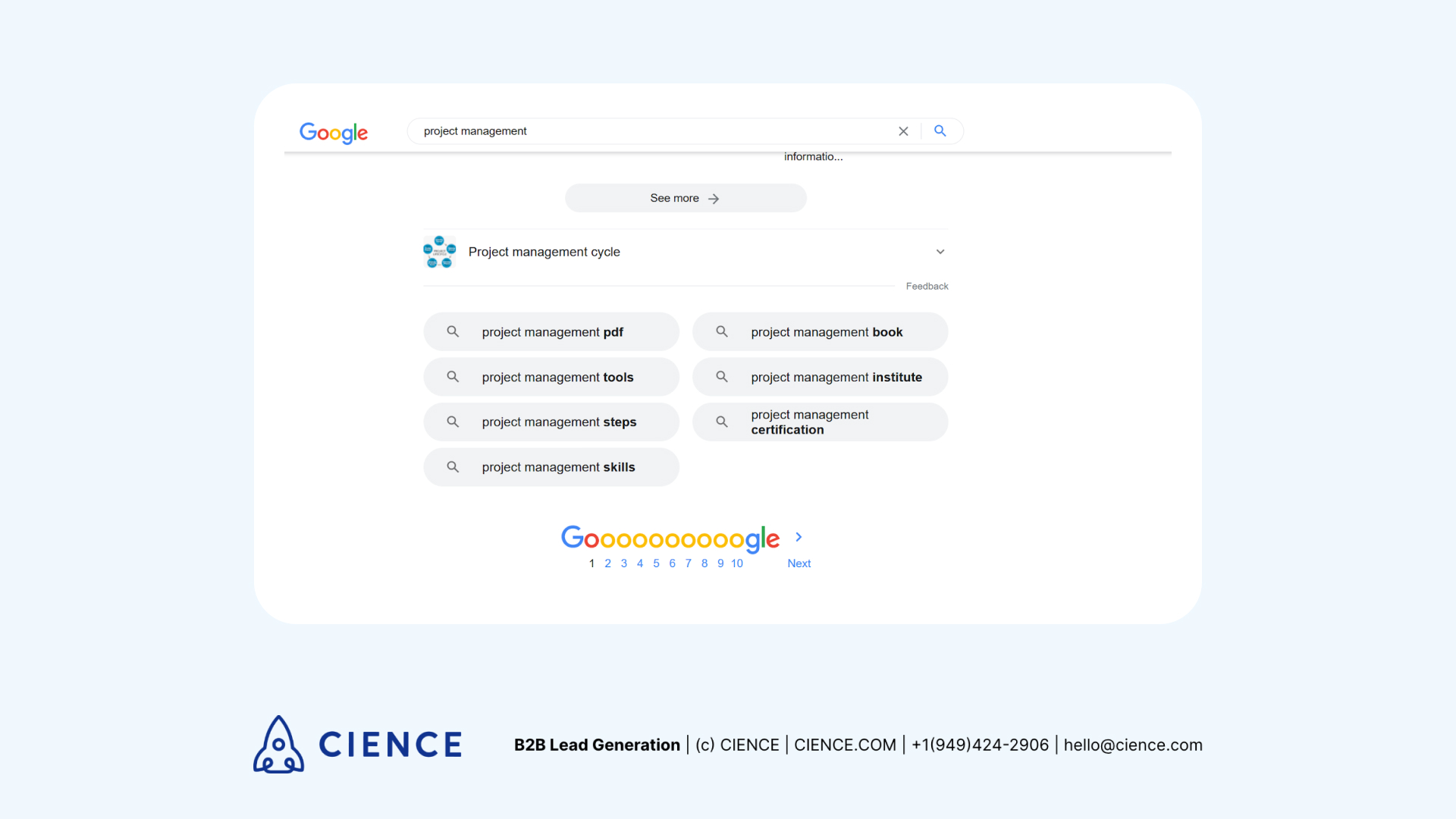
As a result, you can optimize your site and develop additional content that addresses these types of queries. That will help you to attract more organic traffic and improve your ranking and conversion rate.
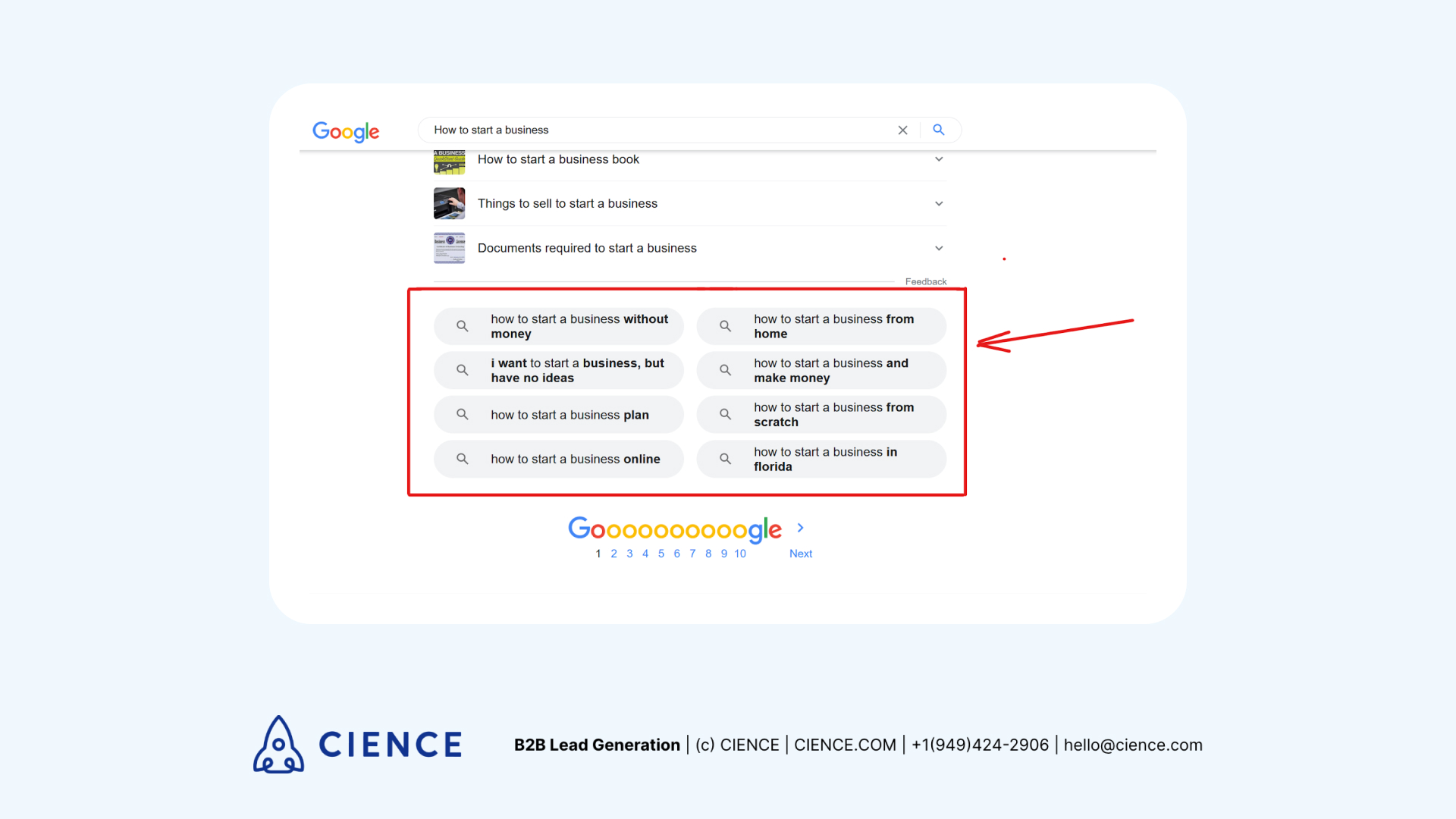
There are several ways to find the related searches of a keyword. You can enter your keyword into the Google search bar and scroll down to the “Searches related to” section at the bottom of the page. Here is an example of a search query relating to “how to start a business.”
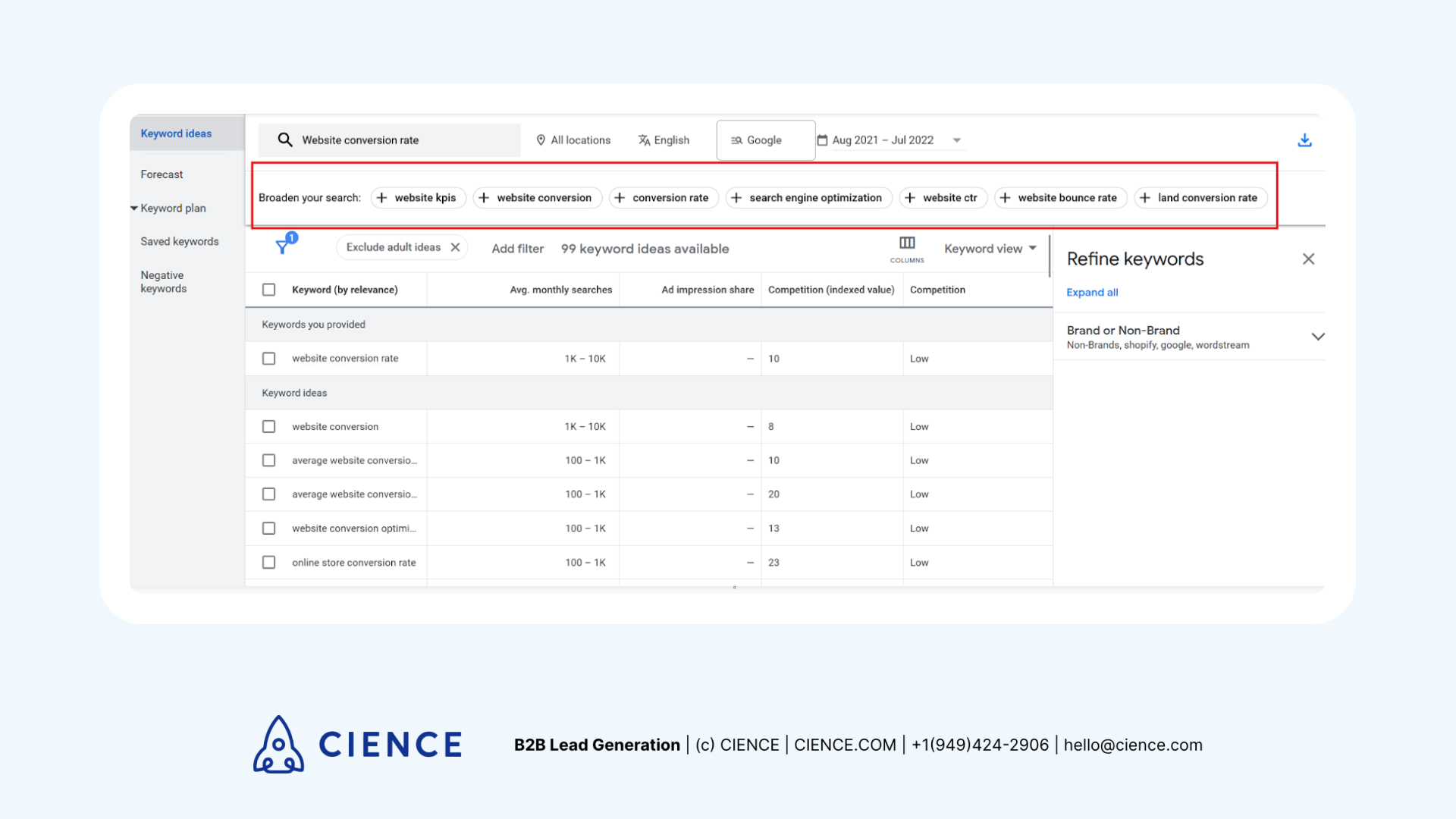
You can also use some keyword research tools to find related searches. One is to use Google’s Keyword Planner tool. Enter your keyword in “Discover new keywords” and click “get ideas.” Then, click “Broaden your search” on the results page to view relevant keywords.
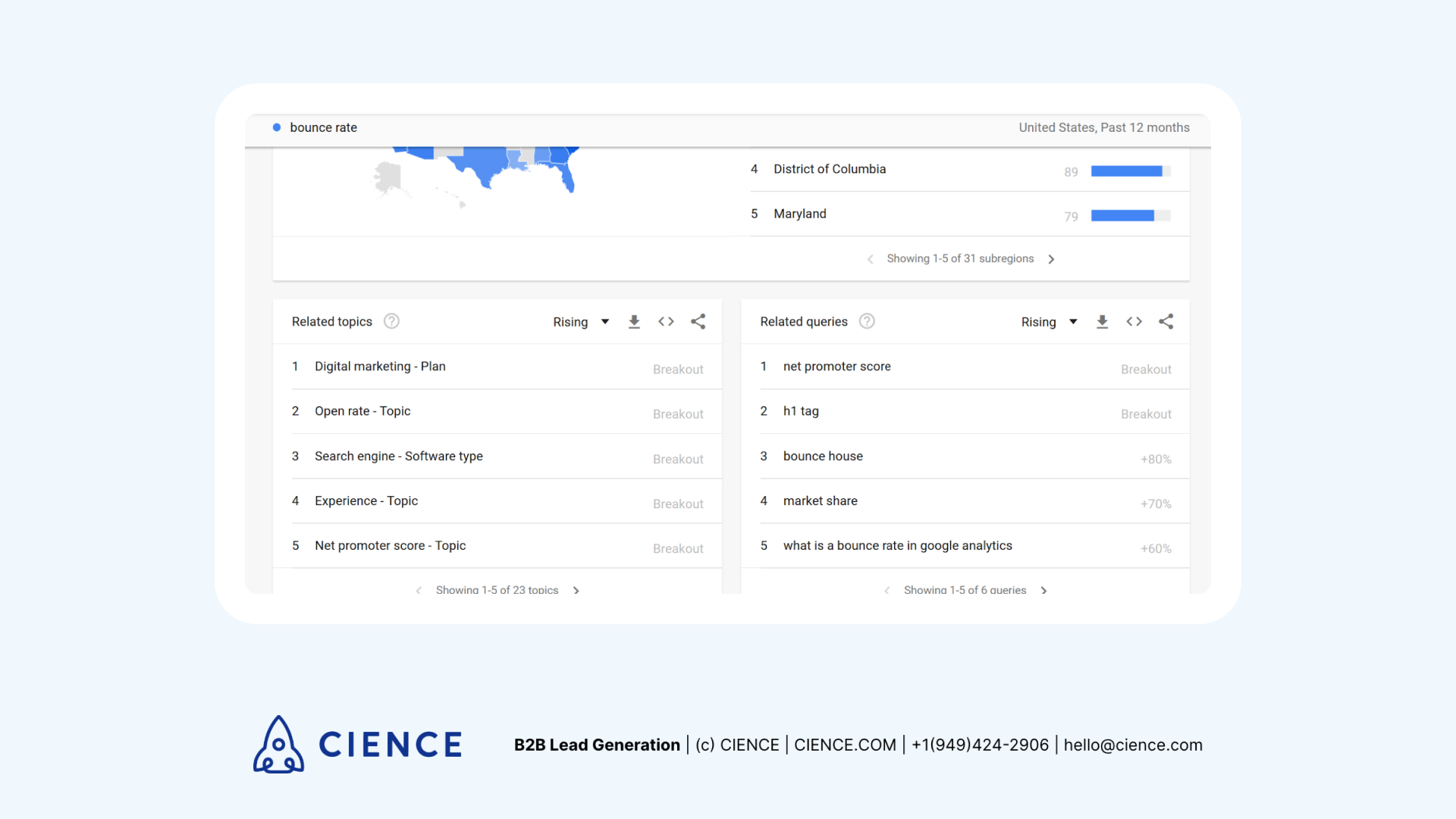
You can also use Google Trends. This tool lets you see how popular a particular keyword is over time. You can also use it to find related searches.
Enter your keyword into the “Explore” box and click “Search.” On the next page, scroll down to view a list of related topics and inquiries. Here’s an example:
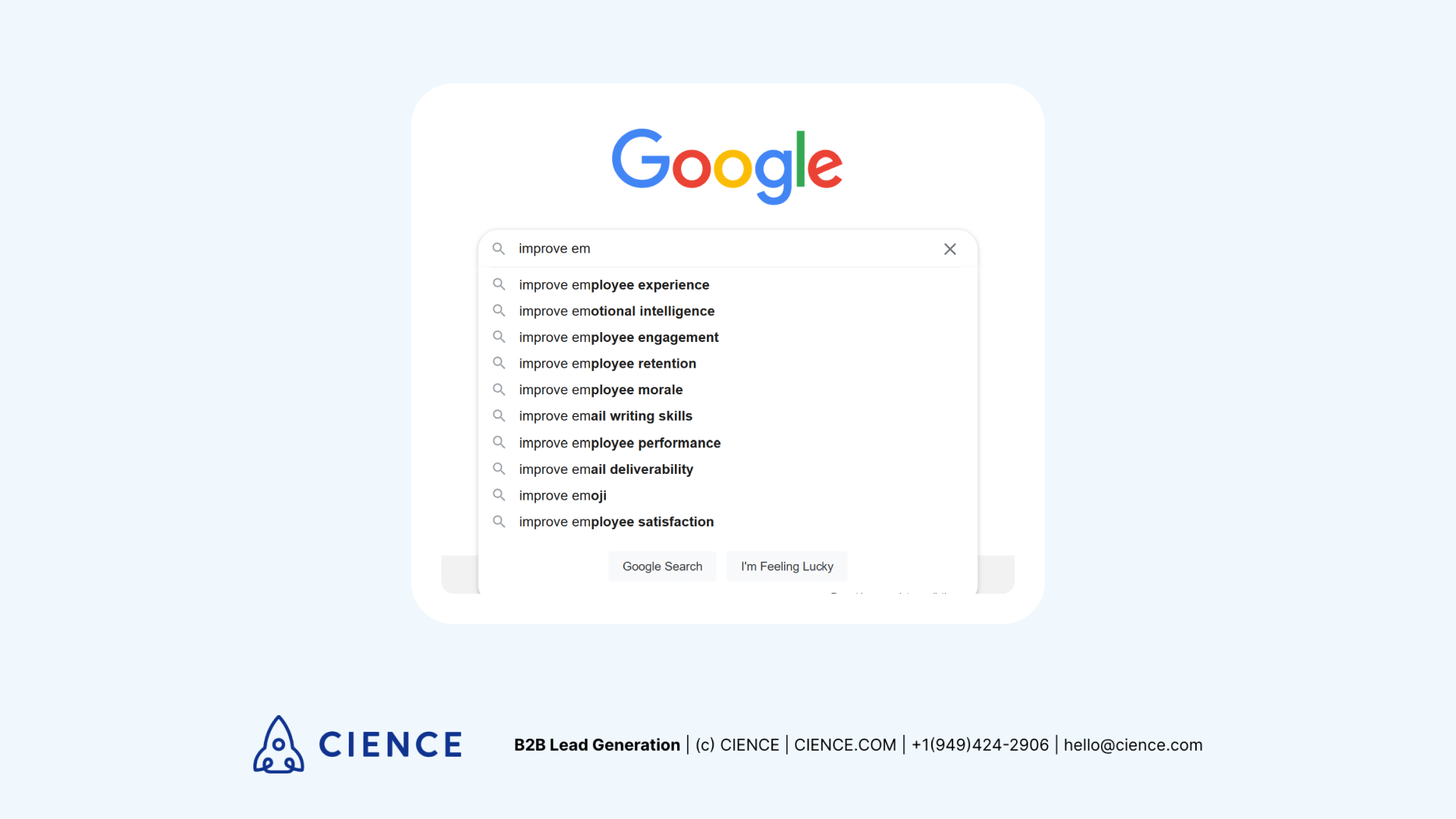
Finally, you can utilize Google’s auto-complete feature to find related searches. Start typing your keyword into the search bar and then look at the suggestions below:
3. Improve user experience.
User experience is a key ranking factor. This includes everything from the design of your website to the way users interact with it.
Understanding user search intent can play a significant role in improving user experience. Users typically have a specific goal in mind when searching for something. If your website can help users achieve that goal quickly and easily, they will likely be happy with the customer experience.
If you can understand what users are looking for and tailor your website accordingly, you can improve their customer experience significantly.
Visitors will likely stop engaging with a website if they have a negative experience using it. You can see from this poll that user experience issues are the primary reason users abandon websites.
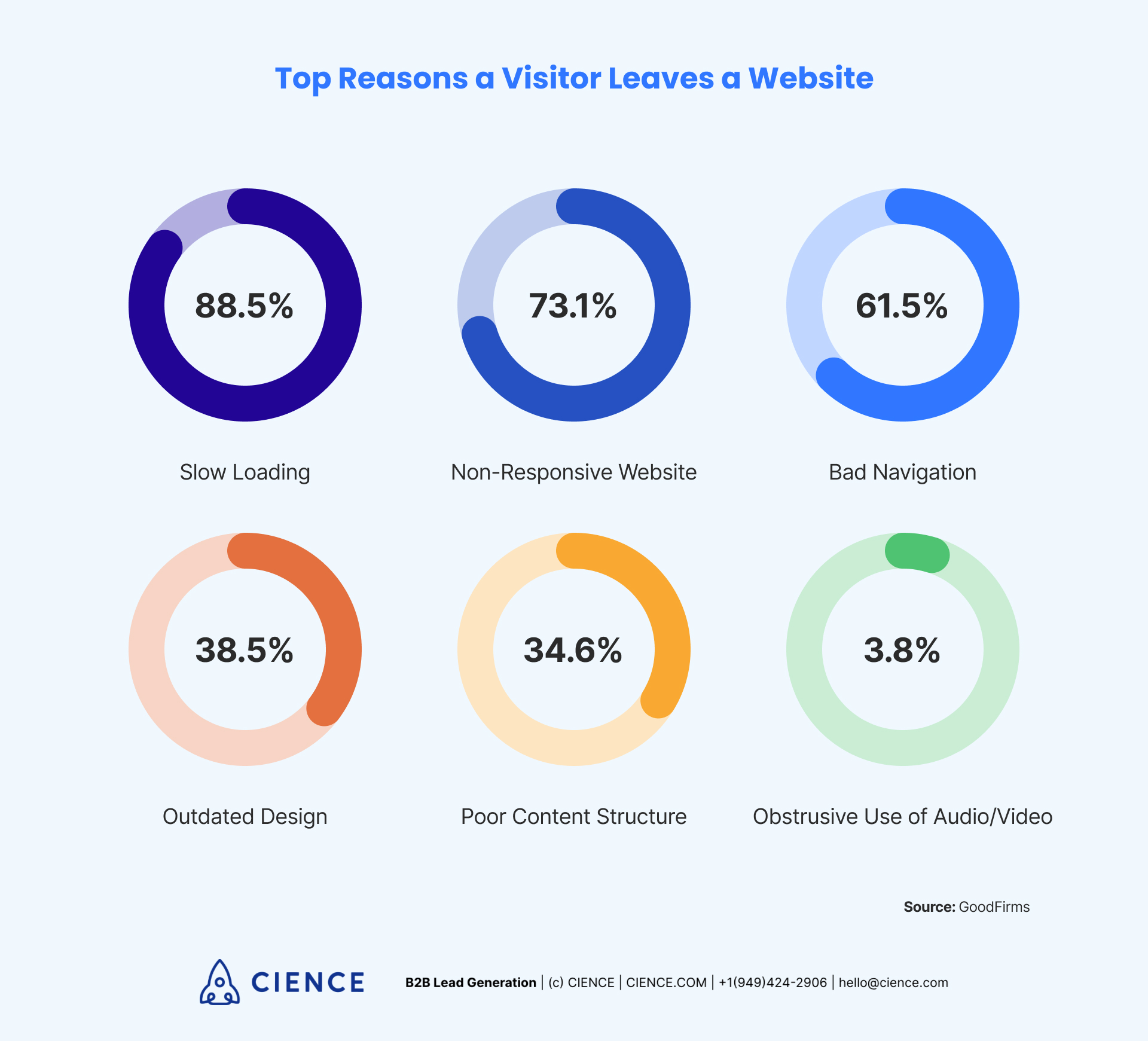
So, ensure that your content marketing strategy helps users get the answers to their questions as efficiently as possible. And, of course, make sure the site is also fast and responsive, your content is well-structured and easy to read, and your pages are free of errors. Moreover, ensure your site is easy to navigate and mobile-friendly.
These technical factors can all impact your rankings, so it’s essential to ensure your site is up to par. It will boost your visibility, attract more people, and keep them returning.
4. Create SEO-optimized content.
Web searchers seek various types of information depending on their search intent. It may be on the same topic, but they seek distinct information because of different intents.
If you create content with search intent to answer the questions they want to be answered, you’re more likely to capture their attention and convert them into customers.
However, as a B2B marketer, you must go further and optimize your content for search engines. This means creating content that is helpful, informative, and SEO-optimized. Here are some tips for creating SEO-optimized content:
- Use keyword-rich titles and descriptions.
- Use keywords strategically in your content.
- Structure your content in an easy-to-read format. You can do this with the help of a rich snippet.
- Include images and videos to break up the text.
- Regularly update your content to keep it fresh.
- Build high-quality backlinks from targeted sites.
Ranking is only half the equation. If your content attracts traffic but doesn’t convert, you’re building a library, not a pipeline.
“Working with CIENCE transformed how we think about content strategy — we quadrupled our organic traffic by applying systematic targeting discipline to every piece we published.” — Hirebook
By following these tips, you can create SEO-optimized content that will help you rank higher in the search results and get qualified traffic to your site.
Increase Conversions with Search Intent
Search intent is what a user is looking for when they enter a query into a search engine. If you can match your content to the user’s search intent, you’re more likely to give them a positive experience, keep them coming back, and boost conversions.
Conversion optimization is a process that can be improved by understanding how people search for information. So, by knowing how people search for your product or service and what content is ranking, you can make tweaks to improve conversions.
These are just a few of the ways that you can improve your conversions using search intent. Always be on the lookout for ways to optimize your online marketing campaigns for search intent to improve conversion rate. CIENCE has helped 2,500+ clients across 250+ industries do exactly that — turning intent-matched content into qualified pipeline.
“The results from CIENCE have been data-driven and measurable — exactly the kind of ROI clarity we needed from a content and lead gen partner.” — Reputation X
CIENCE + graph8 pricing: $5,000 one-time GTM system setup, $2,499/mo strategic execution, and the graph8 platform at $499/mo. No long-term contracts. See full pricing →
Whether or not you decide to work with us, you’ll walk away with a clear picture of where your pipeline is leaking and what it would take to fix it.
Frequently Asked Questions
What are the 4 types of search intent?
The 4 types of search intent are navigational (seeking a specific website, like “Twitter login”), informational (seeking knowledge, like “what is SEO”), transactional (ready to buy, like “Salesforce enterprise pricing”), and commercial (comparing options, like “best CRM tools for startups”). Each type corresponds to a different stage of the buyer’s journey and requires different content to convert effectively.
How do I determine the search intent of a keyword?
Search your target keyword in Google and analyze the top-ranking results. If the results are blog posts and guides, the intent is informational. If they are product pages or pricing comparisons, the intent is commercial or transactional. Google’s “People Also Ask” and related searches sections provide additional clues about what users expect when searching that term.
Why does search intent matter for B2B SEO?
Search intent matters because 88% of B2B leaders use web searches to research vendor solutions. If your content does not match what the searcher expects, they will bounce, and Google will rank you lower. Aligning your content to the correct intent type — educational for informational queries, comparison pages for commercial queries — directly improves rankings, time on page, and conversion rates.

A graph8 company — AI-powered GTM execution across 250+ B2B industries.
graph8 Platform
From $499/mo
Run your own GTM campaigns with AI-powered data, sequences, and analytics.
Start Free — 2,500 Credits No credit card requiredCIENCE Managed
From $2,499/mo
Our GTM teams build and run your outbound campaigns end-to-end.
15-min call · No commitment2,500+ B2B companies served · Month-to-month contracts · See full pricing →