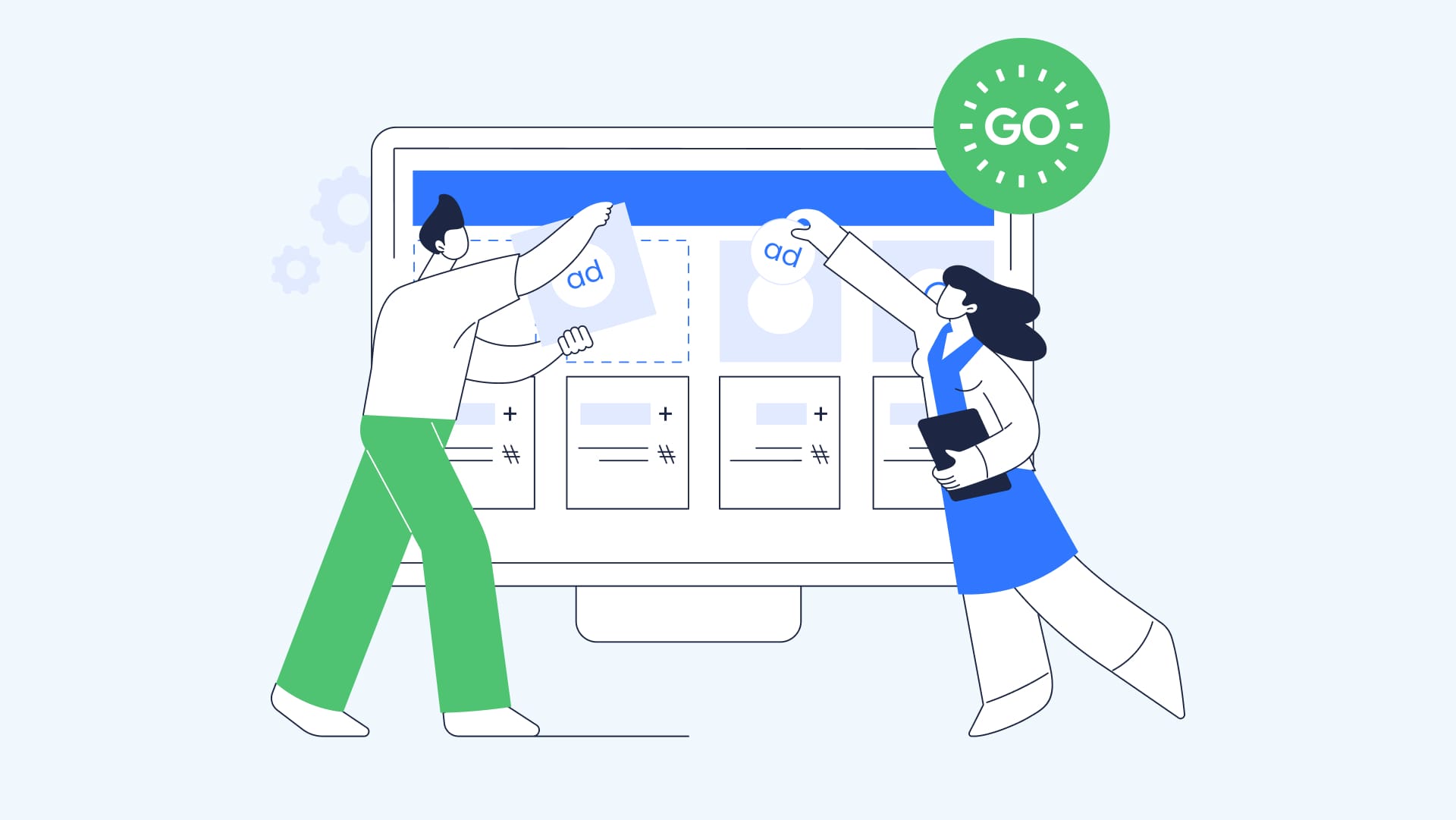
Retargeting serves ads to users who previously visited your website, using tracking pixels to build audience lists. Retargeted users are 3x more likely to click, and retargeting ads achieve 70% higher conversion rates. This guide covers 4 ad types, 5 benefits, and a 7-step campaign launch process.
Last Refreshed: March 2026 with updated statistics and tool information.
Retargeting is a digital advertising strategy that targets users who have already visited your website or interacted with your brand, using tracking pixels to serve them personalized ads across other websites and social platforms to drive return visits and conversions.
From Daniel Conn, GTM Strategist, graph8: “Most B2B teams burn ad budget targeting cold audiences when their highest-intent prospects already visited the site. Retargeting is how you recover that lost pipeline — it lets you keep qualifying the same visitor across every channel they use, not just the moment they land on your page.”
Converting every website visitor into a customer is a marketer’s dream, but the reality is quite the opposite. In fact, 97% of visitors who go to your site will likely never return. It’s fair to say that grabbing their interest is not easy. However, using retargeting strategies allows you to ignite their curiosity and bring them back for more.
Ad retargeting is a revolutionary marketing strategy that has had a huge impact on the way businesses approach online advertising. If you’ve ever browsed the internet for a product or service, only to be presented with ads for that same product or service on other websites, you’ve experienced retargeting.
Retargeting has become increasingly popular in recent years — and for good reason. It allows businesses to target consumers who have already shown interest, increasing the likelihood of a sale or conversion. By targeting these individuals with personalized advertising, retargeting helps keep your brand top-of-mind and encourages them to take action. CIENCE has used these strategies to help 2,500+ B2B companies across 250+ industries build predictable pipeline.
So how does retargeting work? Let’s explore the ins and outs of ad retargeting, the benefits of retargeting, and best practices to increase brand recognition, repeat visits, and ultimately, conversions.
What Is Retargeting?
Retargeting is a digital ad marketing strategy that involves targeting users who have previously interacted with your website or advertisements. The goal of retargeting is to re-engage users who have shown interest in your product or services and encourage them to convert or take a desired action.
Employing ad retargeting strategies helps increase website conversions and drive sales — it’s a clever way of reinforcing your messaging to potential buyers who have become familiar with your website or brand.
And this strategy really works. About 37% of people who are interested in your product or services will click on that ad. And once they do, you can encourage them to take those next steps in the buyer’s journey.
As an essential part of your overall marketing strategy, retargeting is definitely worth considering, seeing as 90% of marketers claim that it performs as well as any other digital marketing tactics.
Discover Retargeting Solutions
How Does Retargeting Work?
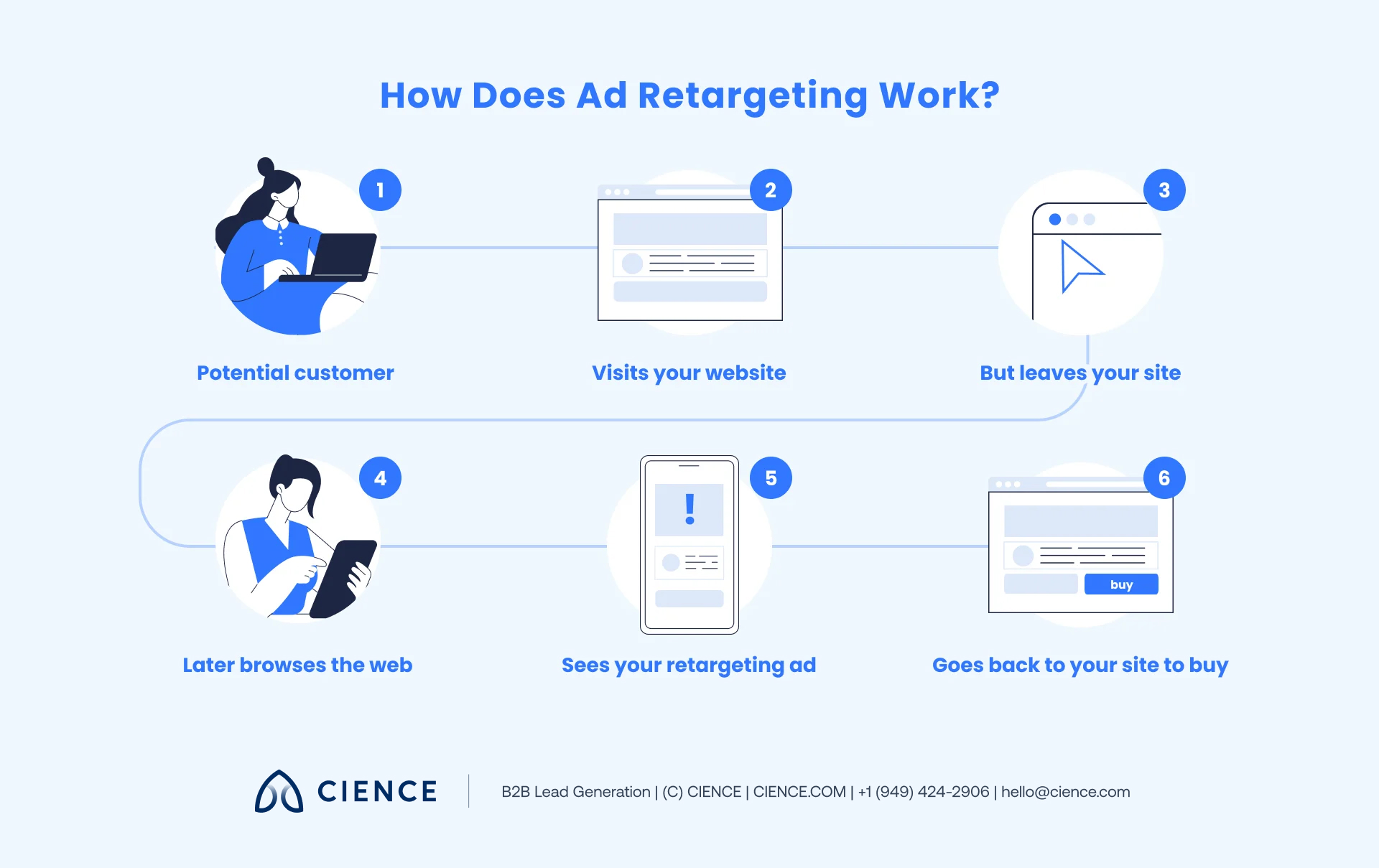
Retargeting works by placing a pixel on your website to track a user’s online behavior and display relevant ads based on that behavior. The pixel records the user’s visit and adds them to a retargeting list.
You can then use this information to show targeted ads to users as they browse other websites or social media platforms. The customers retargeted then become three times more likely to click on your ad than those who have never interacted with your brand before.
For example, if a user visits a website and browses a specific product category, such as lead generation services, the website collects data on their browsing behavior and uses this information to deliver highly targeted ads for lead gen solutions on other websites the user visits. This can encourage the potential customer to click and return to your website and take action.
B2B retargeting tactics also focus on targeting specific companies or decision-makers within those companies. This can be done by tracking IP addresses or using data from third-party providers to identify the company associated with a particular website visit. Once a company or decision-maker is identified, targeted ads can be displayed as they browse other websites or social media platforms.
Retargeting vs. Remarketing: What Is the Difference?
Retargeting and remarketing are two terms that can be used interchangeably, but they actually refer to different strategies in the world of digital advertising. The reason for this overlap is probably that, over time, the concept of remarketing has grown to include both retargeting and remarketing strategies. So what’s the difference? Let’s take a look at how to divide and conquer each strategy:
Retargeting
Retargeting involves showing ads to people who have visited your website or interacted with your brand in some way. As discussed, this is done by placing a cookie on their browser, which allows you to follow them around the internet and serve them ads on other websites.
For example, if someone visits your website and looks at your programmatic ad product, you can retarget them with an ad for your product when they visit other websites that display ads from your ad network.
Remarketing
Remarketing involves reconnecting with individuals who have already engaged with your brand but haven’t made a purchase or converted in some way. Remarketing strategies can be achieved through various channels, such as email marketing and social media outreach.
For instance, if a customer adds a service to their cart but does not follow through with the purchase, you can send them a reminder email including a discount code to incentivize them to complete the transaction.
So, retargeting focuses on showing ads to people who have already shown interest in your brand while remarketing focuses on re-engaging with people who have already interacted with your brand but haven’t converted yet. Not surprisingly, both strategies are highly effective as many businesses use a combination of both to reach their target audience and drive conversions.
When your cost per lead keeps climbing but pipeline stays flat, adding another tool won’t fix it. You need a different system.
“CIENCE delivered a 10% conversion rate across 150 qualified companies — a fantastic result that directly impacted our pipeline growth.” — Turn Technologies
Key Benefits of Retargeting Ads
With the ability to track sales data and analyze user behavior, retargeting ads can be the perfect tool for any business looking to improve its online advertising strategy. Not only does retargeting allow you to stay relevant with potential customers, but it also gives you the opportunity to showcase specific products or services to your target audience. Here are some other top benefits:
1. Increases conversion rates
One of the ultimate goals of any retargeting campaign is to improve conversion rates. In fact, retargeting ads have a higher conversion rate (70%) compared to other forms of online advertising because they target people more likely to convert as they are already brand-familiar. If executed correctly, retargeting can drive higher click-through rates (CTRs), leading to increased sales and profits in the long run.
2. Improves brand awareness and recognition
Retargeting allows you to stay top-of-mind of potential customers by serving them ads after they leave your website, helping to show the value they can get from your business. Retargeting ads can also be customized for users who have interacted with specific products or pages on your site, making them more likely to engage with your brand and convert.
3. Cost-effective advertising
Retargeting campaigns can be more cost-effective than other forms of advertising because they target a specific audience. Rather than showing ads to a broad audience, retargeting ads only appear to people who have already interacted with your brand. By targeting interested prospects, you can prioritize your budget and cut costs.
4. Better return on investment
Retargeting campaigns can provide a better return on investment (ROI) than other types of advertising because they target people who are already familiar with your brand. Again, by focusing on people who are more likely to convert, you can maximize your advertising spend and see a greater ROI.
5. Increases customer lifetime value
Retargeting can help you foster long-term customer relationships. By keeping your brand on the forefront, even after they’ve made a purchase, you’ll encourage repeat business and increase their customer lifetime value (CLV), or the total revenue you can expect to see from a single customer over an entire relationship.
Explore Ad Retargeting with CIENCE
Types of Retargeting Ads
Depending on the target audience that you want to reach, there are several types of channels you can use to supercharge your ad retargeting efforts:
1. Website retargeting
Site-based retargeting reaches users who have previously visited your website but did not convert. It involves placing that tracking pixel on your website, which allows you to follow users as they navigate your site. You can also place ads on other websites or platforms with the goal of bringing them back to your site to complete a purchase or fill out a form.
2. Search retargeting
Also known as keyword retargeting, these ads reach users who have searched for keywords related to your product or service but didn’t visit your site. This retargeting tactic identifies keywords and then gives them relevant ads relevant to their search. For example, if someone has searched for B2B sales outsourcing, your retargeting strategy is to send them ads about the related services you provide.
3. Social media retargeting
Social media retargeting focuses on users who have interacted with your brand on platforms, such as Facebook, Twitter, or Instagram. This retargeting channel allows you to target users based on their social media behavior, such as liking a post, following your page, or clicking on a link to your site. You can then send them social media ads with the goal of driving them to your site.
4. Dynamic product retargeting
This type of retargeting shows ads for specific products that a user has viewed on a website. The ad generally includes an image of the product and a call to action to encourage the user to complete their purchase. This retargeting technique helps personalize the customer experience and encourages them to take action.
CIENCE GO Digital
CIENCE GO Digital is a great programmatic ad platform for businesses looking to improve their ad targeting efforts. GO Digital offers an easy-to-use interface that allows you to precisely target your preferred audience. With its built-in, demand-side platform (DSP), you can create custom audiences and use Bidder-as-a-Service (BaaS) to maximize the reach of your ads.
Retargeting Ad Examples
From industry-specific retargeting to upselling techniques, these retargeting ad examples can help you effectively engage your B2B target audience and extend your outreach:
1. Industry-specific retargeting
This retargeting technique aims to display ads to companies in a particular industry. For instance, if you are a data solutions company, you can target certain businesses by showcasing industry-specific features in your ads. By doing so, your company can reach ideal customers, prompt them to convert, and accelerate the sales process.
2. Cross-selling retargeting ads
Another retargeting ad example is cross-selling, which involves promoting complementary products to customers based on their previous purchases or browsing history. For example, if someone bought data software from your website before, you can retarget them by promoting related products to them.
To successfully cross-sell through retargeting ads, it’s important to have a good understanding of your customer’s needs and preferences. You can use audience data such as purchase history, browsing behavior, and demographic information to create targeted ads that showcase products that will appeal to your ideal customers.
3. Abandoned cart retargeting
This product-specific retargeting ad example aims to win back customers who left items in their cart without making a purchase. Different types of ads can be used, such as reminders of the items, discounts based on the cart’s value, time-limited offers, and suggestions for related services. These ads can be a useful tool to recover lost sales and improve conversion rates by targeting users who have shown a specific interest in a product.
4. Upsell ad retargeting
This type of retargeting shows ads for higher-priced versions of products or services that a business may have shown interest in. For example, a company that provides marketing automation software could display ads for a more advanced version to businesses that have already viewed the basic version. This can boost sales and improve customer satisfaction by offering personalized product upgrade recommendations.
Let Us Do Ad Retargeting for You!
How to Run Retargeting Ad Campaigns
To run a successful ad retargeting campaign, it is important to first identify the audience you want to target and the specific action you want them to take. This requires a data-driven approach that leverages insights and clear objectives. Follow these retargeting steps to optimize your advertising strategies:
1. Build an audience segmentation strategy.
It’s important to recognize that not all customers respond to the same type of ads, especially in the B2B realm. To improve your chances of converting these buyers, it’s a good idea to create different groups, or segments, based on common characteristics. These might include demographics, needs and goals, the company size, and budget.
Of course, there’s no one-size-fits-all approach when it comes to data segmentation, so it’s important to assess what works best for your business and customers.
2. Establish what action you want your audience to take.
In addition to segmenting your audience, you’ll need to consider the specific action you want them to take. Do you want them to make a purchase, sign up for a newsletter, or simply engage with your brand on social media? Defining a clear and measurable goal will guide your retargeting strategy, allowing you to optimize your ad spend and maximize ROI.
3. Create compelling content in your ad targeting.
Now that you know what you want your audience to do, it’s time to start creating a personalized content strategy that speaks to each unique group. It’s also important to tailor everything that your user sees, not only including the ad itself but also the content they encounter after clicking through. The key is to customize everything your audience sees based on their interests and characteristics.
4. Design ads for your retargeting campaign.
When creating retargeting ads, it’s essential to keep them consistent with your brand and marketing strategy. Make sure they’re eye-catching, have a clear message, and a call to action to encourage people to engage with your brand. The goal is to get people interested and to come back for more, the essence of your retargeting marketing plan.
5. Choose a platform for ad retargeting.
Depending on your goals, you’ll next want to select the best retargeting platform that suits your business needs. Some top tools to consider include: GO Digital, Google Ads, Facebook Ads, or Criteo. Evaluate the platform’s targeting capabilities and look for tools that allow you to segment your audience based on their specific needs and interests. Additionally, consider the platform’s reporting and analytics features.
6. Install a tracking pixel for your ad.
The next step is to install a pixel on your website. Here’s how it works: Copy the tracking pixel code provided by the platform and add a small snippet of code to your website’s pages. Make sure to test the tracking pixel by visiting your website and checking if the platform is registering the pixel firing. Once you’ve got the pixel set up, you’re ready to start retargeting. Begin monitoring its performance by using the platform’s tracking and analytics tools.
7. Analyze your retargeting campaign results.
To optimize results, it’s crucial to regularly evaluate the success of your campaigns and make adjustments as needed. By analyzing data and identifying areas for improvement, you can fine-tune your retargeting efforts and create more effective ads and content segmented to your audience. Consider using tactics like A/B testing to continually improve and refine your approach.
Grow Your Business with CIENCE
“CIENCE’s approach is data-driven and measurable — exactly what we needed to build a scalable, targeted pipeline.” — Reputation X
CIENCE + graph8 pricing: $5,000 one-time GTM system setup, $2,499/mo strategic execution, and the graph8 platform at $499/mo. No long-term contracts. See full pricing →
Whether or not you decide to work with us, you’ll walk away with a clear picture of where your pipeline is leaking and what it would take to fix it.
Frequently Asked Questions
What is the difference between retargeting and remarketing?
Retargeting uses tracking pixels and cookies to serve display ads to users who visited your website as they browse other sites. Remarketing typically refers to re-engaging past visitors or customers through email campaigns and direct outreach. In practice, the terms are often used interchangeably, but retargeting is ad-focused while remarketing is communication-focused.
How much does retargeting cost?
Retargeting costs vary by platform and audience size, but typical CPMs range from $2 to $10 for display ads. Retargeting is generally more cost-effective than prospecting campaigns because you are targeting users who already know your brand, resulting in higher click-through rates and 70% higher conversion rates.
How long should a retargeting campaign run?
Most retargeting campaigns run for 30-90 days, depending on your sales cycle length. B2B companies with longer sales cycles may extend campaigns to 90-180 days. Set frequency caps (3-7 impressions per user per week) to avoid ad fatigue and maintain positive brand perception.
Optimize Your Ad Retargeting Campaign
Retargeting has proven to be a reliable way to turn curious visitors into first-time buyers and loyal customers. By keeping your brand top-of-mind and reminding users of the value you offer, you can increase the likelihood of conversions and repeat business.
Setting a clear objective for your retargeting goals can accelerate your sales and ensure that you achieve the best possible outcomes. By implementing a consistent and result-oriented retargeting campaign, you can maximize the benefits of retargeting ads and see significant results in your sales and marketing efforts.

A graph8 company — AI-powered GTM execution across 250+ B2B industries.
graph8 Platform
From $499/mo
Run your own GTM campaigns with AI-powered data, sequences, and analytics.
Start Free — 2,500 Credits No credit card requiredCIENCE Managed
From $2,499/mo
Our GTM teams build and run your outbound campaigns end-to-end.
15-min call · No commitment2,500+ B2B companies served · Month-to-month contracts · See full pricing →