Remarketing is a strategy that re-engages visitors who interacted with your brand but didn't convert. 96% of website visitors aren't ready to buy, yet 70% are more likely to convert with remarketing. Use 5 strategies: funnel-based targeting, email remarketing lists, segmented content, personalized landing pages, and post-purchase nurturing to turn curious contacts into loyal customers.
Last Refreshed: March 2026 with updated statistics and tool information.
Remarketing is a digital advertising strategy that re-engages people who previously interacted with your brand — through website visits, email opens, or ad clicks — but did not complete the desired conversion action. More often than not, customers do not convert after only one interaction with your brand. According to Marketo, 96% of visitors that come to your website are not ready to buy, yet 70% of those consumers are more likely to convert with remarketing. That’s just one example of why remarketing campaigns are so important, and why the large majority of businesses use this strategy.
From Daniel Conn, GTM Strategist, graph8: “Most B2B teams run remarketing as an afterthought — one generic ad that follows everyone who bounced. The campaigns that actually convert are funnel-stage specific: different creative, different message, different offer for someone who watched a demo video versus someone who read a blog post once.”
So how do you succeed in remarketing to your prospects? We’ll break down everything you need to know, including five strategies to help you persuade potential customers who are familiar with your brand to convert.
What Is Remarketing?
Remarketing is a strategy in which a marketer re-engages with someone who has shown interest in their company but has not yet taken the desired action. This could take many forms, including clicking on an ad, visiting your website, opening an email, or following your page on social media.
Benefits of Remarketing
The strategic value of remarketing is rooted in human psychology. Humans need repeat exposure for a message to stick; in the same way, your customers typically need to encounter your brand multiple times before they convert.
To interrupt and capture your customers’ attention, you first need to learn their interests and behaviors. They have to be compelled to keep taking the next logical step, and that requires building a case for strong relevance. These days, consumers expect nothing less. Once you have them hooked, you’ll discover the top benefits of remarketing:
1. Increased outreach
Remarketing campaigns allow businesses to reach a larger audience than they would be able to through traditional marketing methods. This means that more potential customers can be reached, resulting in more conversions and sales.
2. Improved targeting
With remarketing, businesses are able to tailor their message and campaign to the individual consumer; this ensures that the content displayed is relevant and appealing. As a result, it increases the chances of engagement with potential customers and encourages them to take action or make a purchase.
3. Cost efficiency
Remarketing campaigns are often much cheaper than other forms of advertising because they allow businesses to target already interested consumers instead of spending money on reaching out blindly. This makes it an ideal option for budget-conscious companies or those looking for higher return on investment (ROI) from their campaigns.
4. Brand visibility and awareness
Remarketing helps build brand awareness by keeping your business at the forefront of a customer’s mind; this reinforces your message, strengthens customer loyalty, and keeps your products or services first pick when they’re ready to make a purchase decision again in the future.
5. Improved conversion rates
The ultimate goal of any remarketing campaign is increased conversion rates; when done correctly, businesses can expect higher click-through rates (CTR) which will result in more sales and profits over time
Remarketing vs. Retargeting
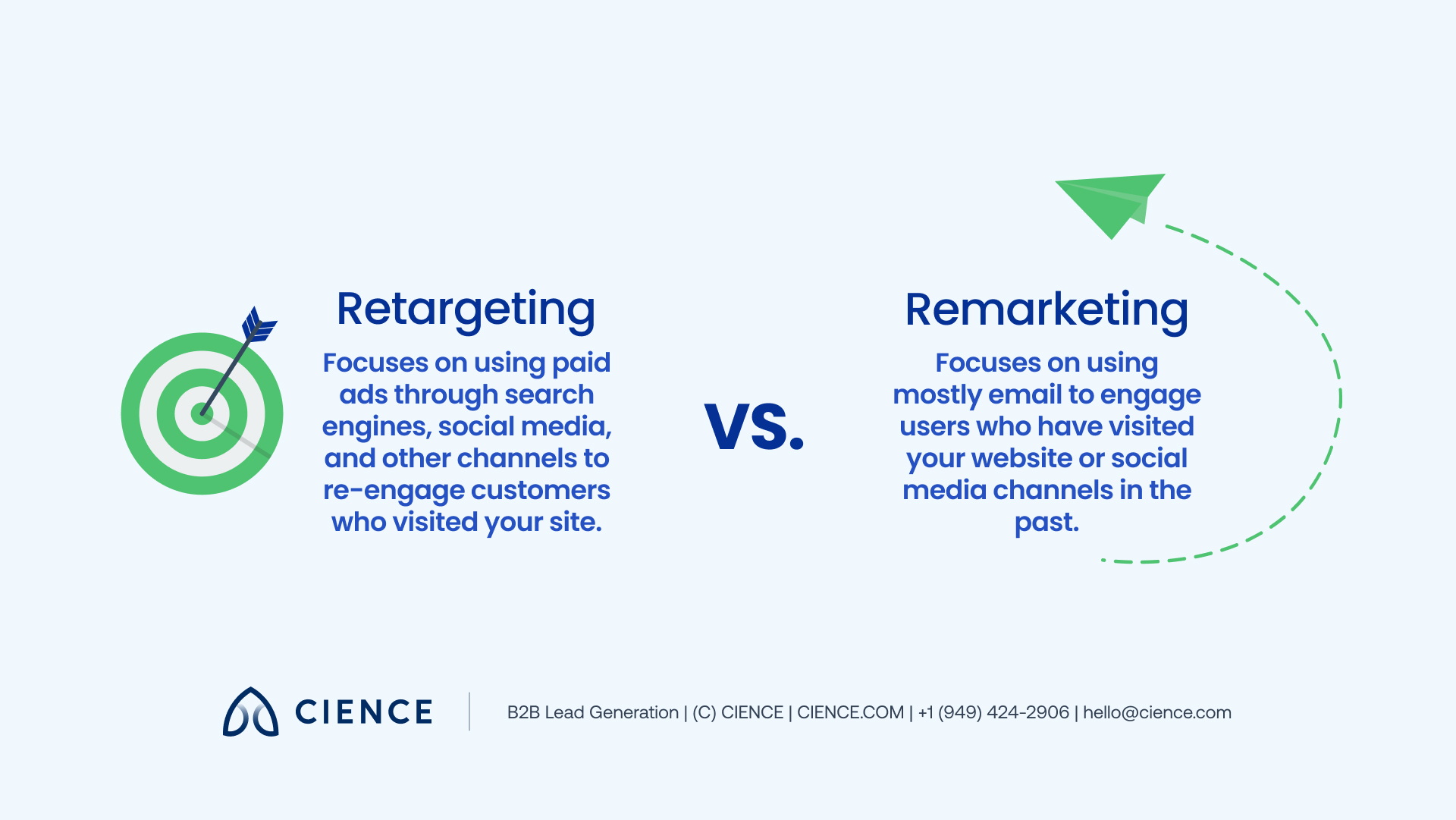
You may have heard remarketing referred to as “retargeting.” These terms are interchangeable, with the only real difference being that retargeting focuses on driving web traffic through display ads, and remarketing mostly involves reaching visitors through email.
“CIENCE generated over 4,000 qualified leads in four months for us — they built a predictable pipeline we couldn’t build internally.” — August Ash
When your cost per lead keeps climbing but pipeline stays flat, adding another tool won’t fix it. You need a different system.
Most marketers simply refer to them as remarketing campaigns because Google describes retargeting display ads and email remarketing as “remarketing.” Both terms encompass reaching out to users who have interacted with your brand in the past.
How Does Remarketing Work?
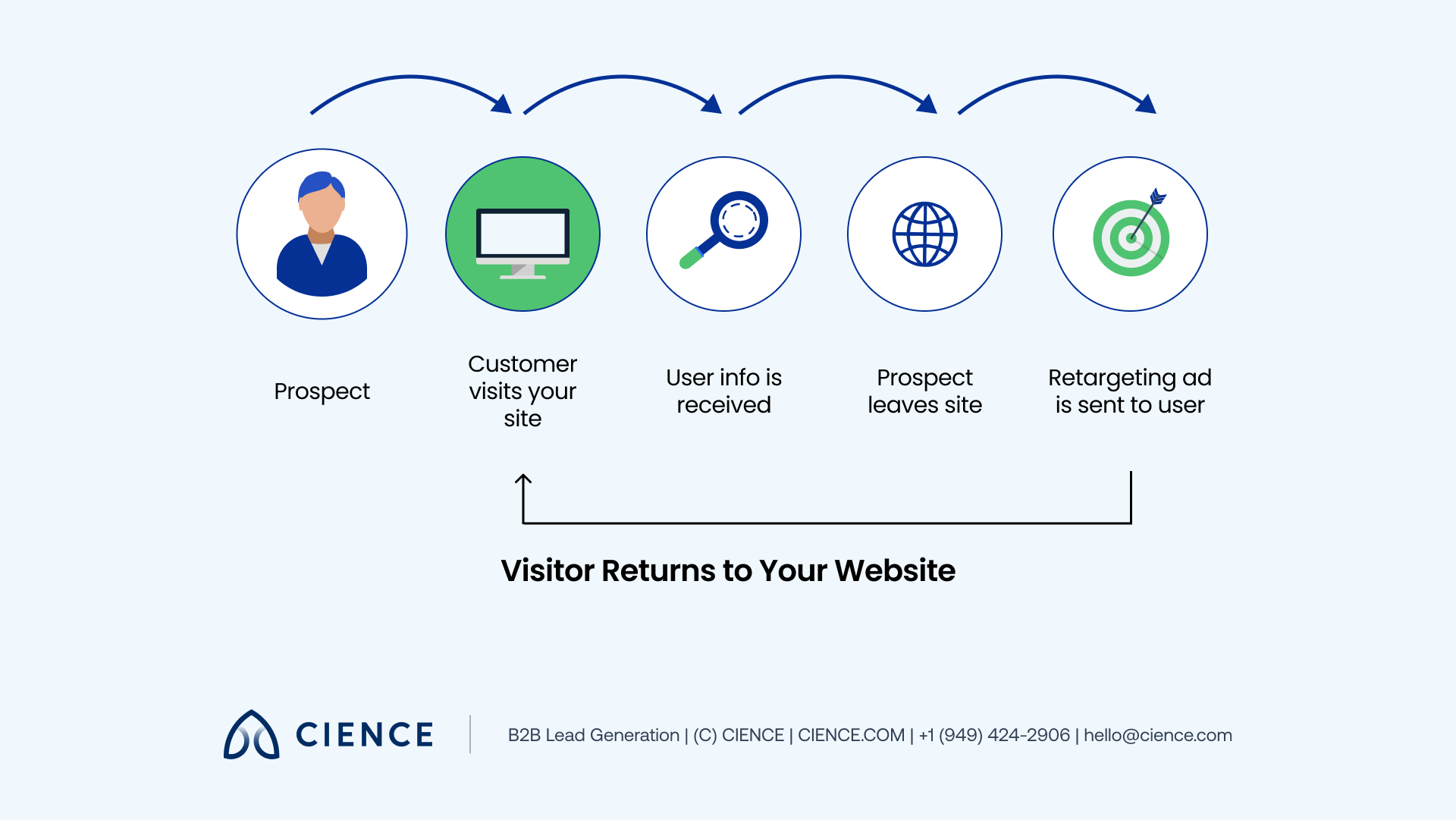
The remarketing process helps keep your brand in front of your potential customers’ eyes even after they navigate away from your website—persuading them to revisit your offer when they need it. Here’s how it works.
Your ad network will give you a small snippet of code called a pixel tag to add to your website so that when a visitor arrives on your site, and give consent to use cookies, their cookie ID is added to your remarketing list. Then, you can create an outbound campaign that shows ads to your list of potential customers to remind visitors of your products and convince them to take the desired action.
Since Google has been moving toward a cookie-free web, consider advertising on platforms that use first-party data and context-based targeting to future-proof your remarketing strategy.
Types of Remarketing Campaigns
Did you know that remarketing to customers makes them three times more likely to click on your ad than those who never interacted with your company? So what types of remarketing campaigns do you need to convert those potential customers? Here are some of the most important:
- Standard: These display ads target potential customers who have already visited your website. It also targets users who search for terms related to your products or services.
- Dynamic: These ads are specifically customized for customers depending on how they browse a web page. They help you build leads and sales by bringing previous visitors back to your site or app to finish a conversion.
- Remarketing lists for search ads (RLSAs): This Google AdWords feature gives you the ability to tailor your search ad campaigns to prospects who visited your site.
- Email: This method enables you to deliver remarketing display ads targeted across various sites to people who open your emails. You can then send follow-up emails to visitors who left without converting so they return to your site.
- Video: This allows you to display remarketing ads to people who have seen your videos or visited your site. You can place these ads at the beginning or in-between videos that your customers view with an option to skip the ad.
- LinkedIn: These remarketing ads are a great way to pursue people who showed interest in your brand. With LinkedIn’s new engagement remarketing options, you can deliver the data you want directly from the platform without relying on browser cookies.
These are all great items to add to your remarketing toolbox. To attract potential customers back to your website so they complete conversion, it’s important to show your audiences that you know them through content that is personalized and segmented.
Creating the desired action
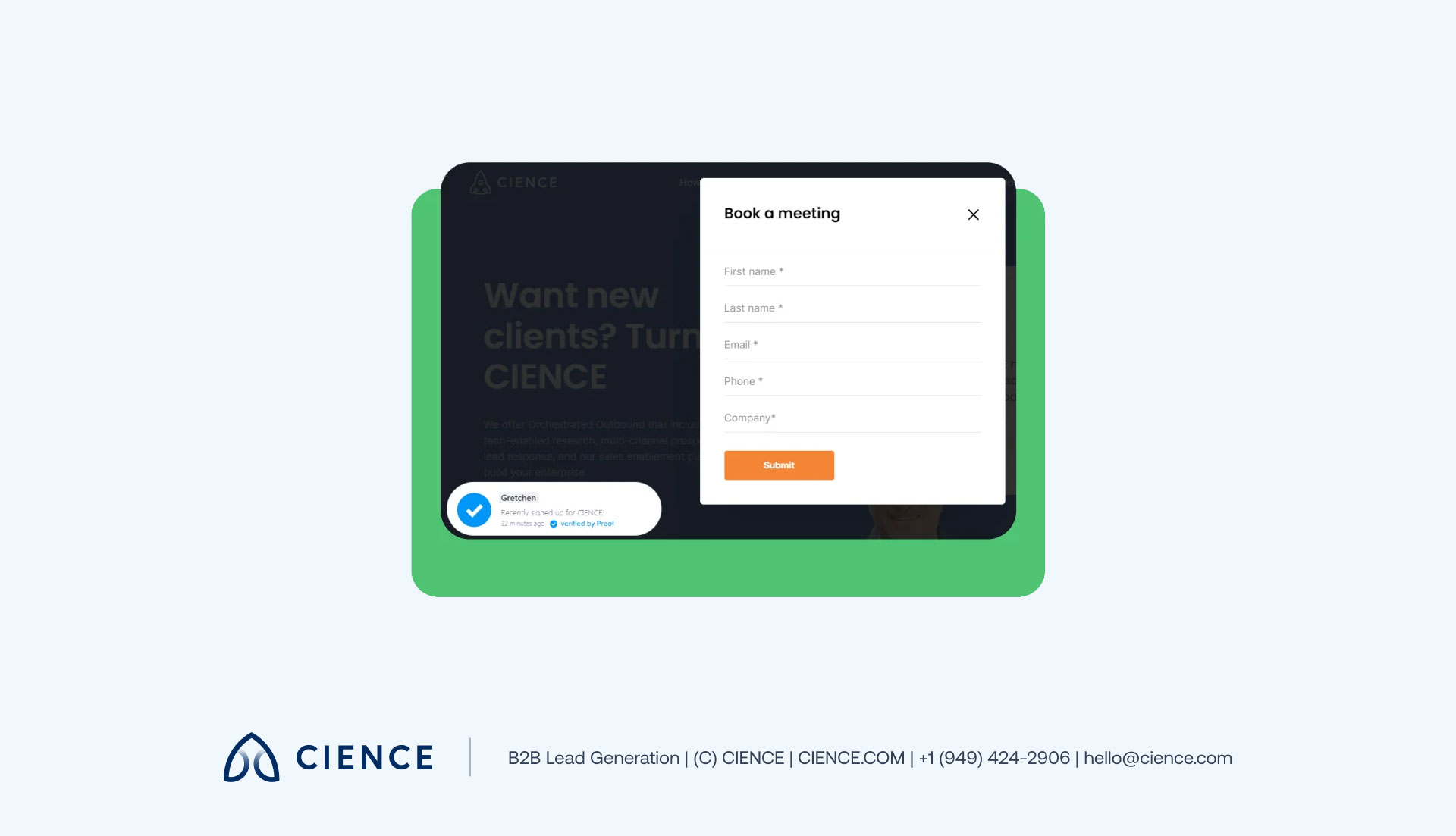
Once you’ve decided on the type of remarketing campaign, you’ll need to explore the types of desired actions that convince potential customers to take once they return to your site. This may include:
- Filling out a form
- Booking a demo
- Downloading an ebook or guide
- Signing up for a freemium
- Setting up a free account
- Registering for a free trial
It’s worth noting that you wouldn’t use remarketing tactics on someone who downloaded an ebook and never took another action the same way as someone who booked a demo and then ghosted you. The key is to determine how to deliver the most relevant marketing tactics to get someone to do what you want.
Pro tip: When you are running a remarketing campaign, segment your message depending on where they fall in the customer journey. But more on that later.
5 Best Remarketing Strategies
Let’s take a look at some ways you can use remarketing strategies to drive conversions. Before digging in, remember — to remarket to a contact, you have to have previously marketed to them, and they’ve had to engage with you somewhere along the buyer’s journey. The way you remarket to that lead or contact who showed intent depends on what action they took to begin with and what desired action they should take next.
Since there are several use cases for remarketing, how do you leverage this tactic to generate leads and win conversions? Here are five ways:
1. Let the sales funnel be your guide.
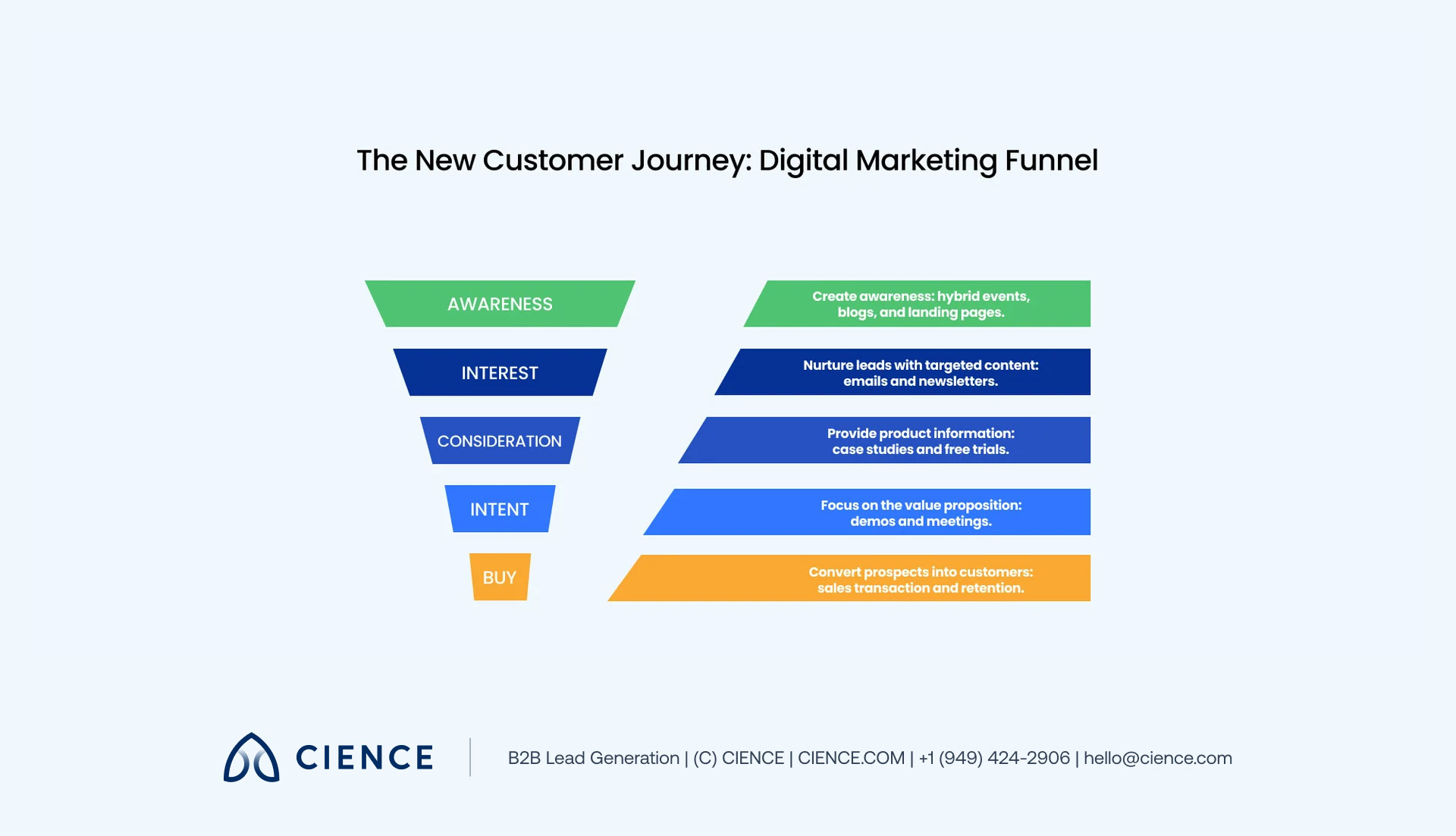
Because the sales cycle for B2B is so much longer than B2C, it is especially important to keep contacts engaged. According to the Rule of 7, it takes on average seven touchpoints before you can expect a conversion. You’ll need to first determine where your customer is in the sales pipeline so you can make a more informed decision about how to engage them. Remarketing in this way will help you drive lead generation, nurture prospects, and create repeat customers.
2. Create remarketing lists for email.
A remarketing list is a group of website visitors who perform a certain action on your site. When you’re building remarketing lists, it’s important to align your PPC campaigns to the appropriate sales funnel stage to ensure you are meeting your customers’ needs every step of the way. Then, you can create remarketing lists for each stage and ultimately develop the ability to nurture leads with hyper-relevance by progressively moving them through each list until they become a buyer.
Of near equal importance to remarketing to new email subscribers is nurturing existing ones. Segment your list and tailor your forms according to which stage of the customer journey they’re in at the moment. Based on the AIDA framework, this digital marketing funnel takes into account the dynamics of digital and social media:
3. Craft segmented lead gen content.
No remarketing strategy would be complete without carefully chosen content that speaks to where your potential customer finds themselves in the consideration stage. You could send them a datasheet, one-pager, case study, white paper, video, blog post, visual, or email (the list goes on).
Content marketing didn’t become a buzzword because nobody found it effective. In fact, marketers have embraced it in the last several years because providing value yields much stronger results than forcing your way into a sale. Delivering relevant content also builds stronger customer relationships and speaks to pain points in a way that comes across as authentic and empathetic.
4. Create personalized landing pages.
In remarketing, you don’t want to paint with a wide brush and target all of your visitors with the same message. Instead, create distinct landing pages for each campaign so that the user experience aligns with how you’ve segmented your audiences. If they find your message is extremely relevant, they will fill out a form and become a lead, and you can then move to the next remarketing list.
To align specific landing pages with stages of the marketing funnel, you might start with a landing page focused on content (awareness), then social proof (consideration), and finally B2B sales (buy). The purpose for each landing page is different: Show ‘em you know ‘em, highlight logos that have driven success, and cut to the call-to-action (in that order).
5. Deliver a top-notch, post-purchase experience.
Just because your first-time buyers have wrapped up their time with you doesn’t mean you should stop remarketing to them. To convince your departing client that they will need you in the future, you’ll want to leverage the interactions you’ve tracked to call out how you can solve their pain points.
Sustaining the customer relationship over email post-purchase is a great way to keep the door wide open. Through consistent nurturing, you can win customer loyalty via upselling, cross-selling, and renewing loyalty campaigns.
Use Remarketing to Drive Revenue
Remarketing has been known to turn curious contacts into first buyers, and first buyers into loyal customers, by building familiarity and relevance. The benefits of remarketing are real and measurable: remarketed customers are 3x more likely to click your ad, and companies using multi-channel remarketing see 70% higher conversion rates than those relying on first-touch outreach alone.
This constant remarketing effort to remind visitors of your brand presence and value not only helps you increase conversions but also drives recurring revenue in the future. CIENCE has applied these exact principles across 2,500+ clients in 250+ industries, earning a 4.6/5 rating on Capterra.
“CIENCE drove a 500%+ increase in monthly appointments for us. The pipeline we built together would have taken years to develop internally.” — Silicon Valley Insight
CIENCE + graph8 pricing: $5,000 one-time GTM system setup, $2,499/mo strategic execution, and the graph8 platform at $499/mo. No long-term contracts. See full pricing →
Whether or not you decide to work with us, you’ll walk away with a clear picture of where your pipeline is leaking and what it would take to fix it.
Frequently Asked Questions
What is the difference between remarketing and retargeting?
The terms are largely interchangeable. The main distinction is tactical: retargeting typically refers to serving display ads to past website visitors, while remarketing focuses on re-engaging contacts through email. Google uses “remarketing” as an umbrella term for both approaches, and most marketers follow that convention.
How many touchpoints does remarketing need to convert?
According to the Rule of 7, prospects need an average of seven interactions with your brand before converting. In B2B, this number can be higher due to longer sales cycles and multiple decision-makers. Remarketing campaigns that combine display ads, email, and LinkedIn touches across the funnel consistently outperform single-channel approaches.
Is remarketing worth the investment for B2B companies?
Absolutely. Remarketed customers are 3x more likely to click on your ad than cold prospects, and 70% of visitors who see remarketing ads are more likely to convert. Since B2B sales cycles are longer and involve more stakeholders, staying visible throughout the decision process is critical for closing deals.

A graph8 company — AI-powered GTM execution across 250+ B2B industries.
graph8 Platform
From $499/mo
Run your own GTM campaigns with AI-powered data, sequences, and analytics.
Start Free — 2,500 Credits No credit card requiredCIENCE Managed
From $2,499/mo
Our GTM teams build and run your outbound campaigns end-to-end.
15-min call · No commitment2,500+ B2B companies served · Month-to-month contracts · See full pricing →