
Data-driven marketing uses high-quality data segmentation, intent signals, and CRM analytics to personalize campaigns and boost ROI. McKinsey reports personalized campaigns deliver 5-8x ROI on marketing spend. Companies using DDM are 6x more likely to be profitable year-over-year. This guide covers the core benefits, common challenges, and a step-by-step implementation framework.
Last Refreshed: March 2026 — updated statistics, tool recommendations, and pricing context.
Data-driven marketing (DDM) is a strategy that uses customer data, analytics, and segmentation to personalize campaigns and optimize ROI. According to Forbes, 64% of executives say DDM is crucial to success, and McKinsey reports personalized campaigns deliver 5-8x ROI on marketing spend. Companies that commit to data-driven practices are 6x more likely to be profitable year-over-year.
From Daniel Conn, GTM Strategist, graph8: “The companies that win at data-driven marketing aren’t the ones with the most data — they’re the ones that ruthlessly prioritize signal over noise. A smaller list of high-intent accounts, built from verified firmographic and behavioral data, will always outperform a bloated database of cold contacts.”
This guide covers the benefits, challenges, and a step-by-step framework for implementing a data-driven marketing strategy in your lead generation campaigns.
What Is Data-Driven Marketing?
Data-driven marketing (DDM) can be defined as a combination of methodologies that apply high-quality data to develop more engaging lead generation efforts.
Data marketing strategies heavily rely on data segmentation actions to achieve a deep understanding of the target. Dissecting account-related data through different criteria makes it easier to organize similar target profiles into specific groups, making them better fitting for certain follow-up procedures.
Intent data techniques are also quite popular while assembling DDM working plans, for they can be used to identify digital users’ web content consumption and employ these insights to optimize remarketing campaigns, inbound content, and overall applications.
The integration of data from multiple sources is essential for developing a holistic understanding of the customer.
Research shows that CRM data remains the most common approach taken by digitally mature companies to augment data-driven marketing campaigns (48%), but 34% of organizations are beginning to consider predictive analytics as a means to enhance their DDM approaches.
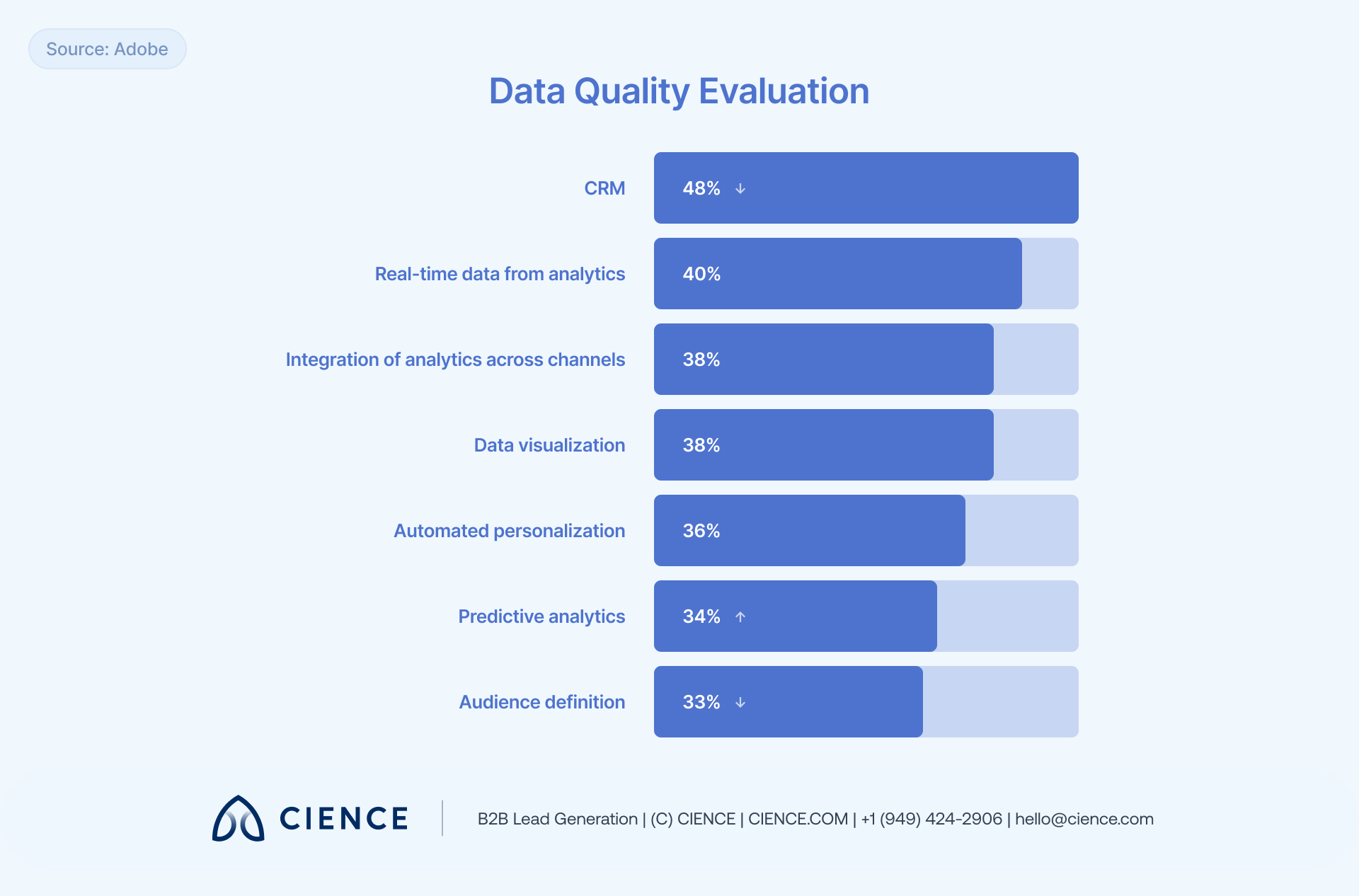
That said, all data sources come into play to craft the most authentic DDM experience, which includes the following core pillar aspects:
- Personalized customer experience
- Top-notch data management
- Well-rounded buyer personas
- Optimized budget campaigns
- Authoritative inbound content
- Clean sales funnels
However, to take full advantage of the DDM methodology, B2B companies must be ready to embrace data and adapt it to their infrastructure, processes, and culture. Full commitment is advised — shallow data-driven practices produce shallow results.
CIENCE has worked with 2,500+ B2B companies across 250+ industries to build data-driven pipeline programs. Explore what that looks like for your team →
Benefits of Data-Driven Marketing
Prospects today are constantly exposed to generic marketing messaging, which has made them more selective about the CTAs they choose to interact with. Data-driven marketing campaigns are tailor-made, meaning that targets are more likely to respond positively to emails, content, and ads aimed at solving their specific queries.
The three top advantages of data-driven marketing strategies include:
1. Improves customer experience
McKinsey reports that personalized campaigns can deliver five to eight times the ROI on marketing spend, and can lift sales by 10% or more.
Data-driven marketing solutions can be used to craft specific messages for certain target account lists (TALs) and accelerate the trust-building process between the brand and the prospect.
2. Allows for better decision-making
The use of data analysis enables marketers to base decisions less on assumptions and more on practical use cases. This translates into a more conscious use of budget, better timed cold calling and email campaigns, and creating content around the topics that the prospect is interested in.
3. Boosts targeting efforts
Understanding an audience can be challenging for B2B companies that don’t possess full control of their data exhaust, which can be defined as the result of every single online action deployed by a digital user. It includes log files, cookies, temporary files, and even stored information for every digital transaction.
DDM helps marketing teams to create accurate ideal customer profiles (ICPs), which hold rich information about what type of media, devices, channels, and platforms perform better for certain targets.
Challenges of Data-Driven Marketing
Implementing a solid DDM methodology can mean a radical transformation for B2B organizations that are not used to operating through complex, data-centered decision-making processes.
Here are some obstacles businesses must be ready to face:
Gathering high-quality data
Sorting the wheat from the chaff is no child’s play. The vast amount of data flowing through the different channels of your organization demands expertise, time management, and energy from your collaborators.
First-party data refers to all of the information collected directly from your website. Third-party data involves information collected across the web. Both are needed to generate efficient data marketing campaigns. The catch lies in deciding which data providers, systems, and platforms are best suited for your business’s objectives.
Avoiding invasiveness
Nowadays, personal data is one of the most delicate assets in the digital market. Even if a website visitor decides to share their information with you, they have the right to know how it will be used and what benefits it brings.
Data transparency is a top priority for digital prospects, especially for high-end decision-makers. Companies must collect information in a clean, acknowledged, subtle way, and apply it with a high sense of responsibility.
Applying the insights
While it may sound odd, a lot of companies spend millions on data-gathering tools, analysts, and advisors just to completely ignore the results.
Data is cold and will provide a clear picture of what is working and what is not. Implementing the consequent recommendations is a vital part of the commitment that execs and managers accept by inviting data into their brand’s structure.
When your cost per lead keeps climbing but pipeline stays flat, adding another tool won’t fix it. You need a different system.
“The conversion rate was fantastic. CIENCE helped us identify and engage over 150 qualified target companies — the data quality of their outreach made the difference.” — Turn Technologies
5 Data-Driven Marketing Strategies for B2B Companies
DDM efforts can strengthen short-term performance campaigns or long-term brand-building programs depending on the goal you want to pursue.
Here are data-driven marketing examples your business can apply to raise its performance:
1. Track your website interactions
Every website out there holds various options for visitors to submit their comments, questions, or contact information. All interactions can lead to meaningful data-centered insights if processed correctly. The most common data applications are:
- User experience. This involves behavioral traits such as in-page clicks, spent time, mouse movement, navigation patterns, and bounce rate. This information can be used to make your website more suitable for retaining visitors.
- Content performance. Webinars, blog posts, newsletters, white papers, and every other content format holds a different intent. Analyzing what styles and topics are the most popular among users makes it possible to craft more authoritative content.
- Engagement. While web pages are expected to convert customers, their main goal should be to educate prospects. Live chats and chatbots make great bridges to understand the user’s needs and the buyer’s journey.
If not processed correctly, wild data can roam far and wide, even inside a well-structured website. It is advisable to integrate different data-tracking tools to make the most of every piece of information.
2. Refine your remarketing efforts
Once a user exits your website, remarketing actions need to be executed to plant your brand at the top of their minds so they can come back once your offer is processed and considered an attractive possibility.
Data is extremely useful to know how and when to trigger specialized ads based on what type of interactions were deployed inside the landing page. Here are some DDM techniques aimed to produce meaningful conversations:
- Tweak your message. Most B2B prospects will need multiple touch points with brands before making a decision, so design a multistep ad structure that nurtures them through organic information about your product, experience, success rates, and other persuading assets.
- Diversify your content. Different landing pages with distinct angles, social media content, and mentions on topic-related panels allow a brand to maximize its credibility.
- Go for the conversion. B2B prospects don’t have time to waste, so be ready to trigger more hard-selling ads as soon as the awareness and interest stages of the buyer’s journey are over.
3. Filter your prospect selection
Experienced marketers know that not every prospect is worth the chase. Data marketing simplifies the process of identifying what leads are more valuable for the company and most likely to buy.
Information such as location, age, gender, business size, education level, and personal interests are just some examples of significant data that can lead to a deeper understanding of your prospect’s expectations.
A great data-based practice is to classify your prospect’s profiles in the following tiers:
- Top-tier: These are the most profitable prospects who have already expressed their desire to close a deal.
- Mid-tier: These prospects have shown active interest in your product but are not at the final stages of their buyer’s journey.
- Bottom-tier: These prospects do not have the intent to purchase at this moment.
4. Integrate data-centered technology
Customer data platforms (CDPs) are interactive databases that collect relevant sales and behavioral data of your customers, creating extensive and constantly evolving individual data profiles.
A data-driven tool like this can save a lot of time, effort, and budget when gathering demographic, psychographic, behavioral, firmographic, and transactional data, accelerating the conversion rate for the fittest prospects.
While B2B companies that are new in data integration might not be able to exploit every bit of information delivered by a CDP, most data partners will provide assistance on how to create the most optimal configurations depending on what you aim to measure.
5. Personalize your email campaigns
Inside the B2B environment, every opened or answered email is a small step toward victory, and data can provide great help by making readers feel like you are no stranger to their situation. Research shows that more than 20% of marketers say personalization can improve email engagement.
Simple yet meaningful aspects like calling the lead by their first name, knowing the context of their industry, including interesting pain points or solutions in the header, and sending the email at the right moment can be decisive for the success of the campaign.
Furthermore, data-driven practices allow marketers to fully understand what email sequences have performed best, what CTAs were the most clicked, what content was the most popular, which emails were answered, and with what purpose.
All this data contributes to the creation of more sophisticated email templates with maximized open and click rates.

Best Data Marketing Platforms
Selecting the right data tools and providers will only depend on what your goals are in the short, mid, and long term. Here are some top-notch data platforms that might help your marketing team access the information that would raise their ROI:
CIENCE GO Data
CIENCE GO Data is a sales intelligence platform that offers over 300 million lead records from all industries to its users. GO Data validates records, email accounts, and active phone numbers daily, and provides rich insights that allow a more organic integration into your team’s current data-driven marketing campaigns.
CIENCE GO Show
CIENCE GO Show uses tracking pixel technology to generate a detailed profile of all your website visitors. Its visual ID system identifies prospect attributes like employee size, revenue, and industry sector while creating instant integrations into your revenue team pipelines.
HubSpot
HubSpot’s marketing hub is a well-known omnichannel platform that allows the managing, tracking, and distribution of all of your customer data in one location.
It helps marketing teams to produce optimized content, start segmented email campaigns, keep an eye on social media activity, and manage retargeting ads all from one place.
Buzzsumo
Buzzsumo enables your team to track the performance of your digital brand, improve the understanding of your competition, and optimize your website content.
SEO-based marketing teams often use Buzzsumo to investigate popular keywords, content categories, and published material to identify patterns that might enhance their content strategies.
Google Analytics
This list wouldn’t be complete without mentioning the foundational data-driven marketing tool. Google Analytics has established the industry standard for monitoring and reporting on user behavior.
This free tool has helped marketers learn more about their website’s traffic, bounce rates, visitor sessions, behavior flows, conversions, and acquisitions. It can be directly connected to a brand’s Google Ads account and is friendly with most data-driven marketing platforms.
Frequently Asked Questions
What is data-driven marketing?
Data-driven marketing is a strategy that uses customer data — demographics, behavior, purchase history, and intent signals — to make informed decisions about campaigns, messaging, and channel selection. Instead of relying on intuition, marketers use analytics to personalize outreach and optimize ROI at every stage of the funnel.
What tools do you need for data-driven marketing?
Core tools include a CRM (Salesforce, HubSpot), marketing automation platform (Marketo, Pardot), analytics suite (Google Analytics), data enrichment tools, and a customer data platform (CDP) to unify everything. Intent data platforms like CIENCE GO Intent add buying signals to help prioritize high-propensity leads.
What is the ROI of data-driven marketing?
McKinsey reports that data-driven personalization delivers 5-8x ROI on marketing spend. Companies using data-driven strategies are 6x more likely to be profitable year-over-year. The key is clean, accurate data — poor data quality costs businesses $25M+ annually in wasted spend.
How do I get started with data-driven marketing?
Start by auditing your existing data sources — CRM, website analytics, email metrics, and ad platforms. Define your ICP and key metrics. Implement tracking across all channels. Then use segmentation and A/B testing to move from broad campaigns to targeted, personalized outreach. CIENCE has helped 2,500+ companies across 250+ industries build this foundation.
“CIENCE’s data-driven outreach helped us achieve our target of 8–10 qualified signups per week through a methodical, signal-based approach that our internal team couldn’t match alone.” — Segment
CIENCE + graph8 pricing: $5,000 one-time GTM system setup, $2,499/mo strategic execution, and the graph8 platform at $499/mo. No long-term contracts. See full pricing →
Whether or not you decide to work with us, you’ll walk away with a clear picture of where your pipeline is leaking and what it would take to fix it.
Leverage Data-Driven Strategies to Accelerate Conversions
A big reason why so many B2B marketing leaders depend on ROI to certify the success of their campaigns is that the facts are clear for everyone to see. While there is no bulletproof formula that guarantees unfailing gains, data is proving to be the right ally for businesses that want to keep on closing the gap between investment and gains.
In many ways, data has already transformed the meaning of “marketing” as we knew it. Customers’ expectations and needs evolve so quickly that not even the strongest hunches, as well-intended as they may be, are good enough to come up with a successful campaign.
Creativity, instinct, and cleverness will always be honored guests for every marketing strategy out there. The only real difference is that we now possess a magnifying glass that provides a detailed view of how, when, and where to act. And while knowing so much may take away some mystery, the present market demands much more than pure luck.

A graph8 company — AI-powered GTM execution across 250+ B2B industries.
graph8 Platform
From $499/mo
Run your own GTM campaigns with AI-powered data, sequences, and analytics.
Start Free — 2,500 Credits No credit card requiredCIENCE Managed
From $2,499/mo
Our GTM teams build and run your outbound campaigns end-to-end.
15-min call · No commitment2,500+ B2B companies served · Month-to-month contracts · See full pricing →